
What Is Cold Brew Coffee?
What Is Cold Brew Coffee?
Cold brew coffee has a way of making a coffee break feel a little more relaxed. It is chilled, refreshing and easy to sip, whether you enjoy it black over ice or softened with milk. Its smooth character and make-ahead convenience have helped it become a favorite for home brewers and coffee shop regulars alike.
Despite the name, cold brew is not simply hot coffee that has cooled down. It is made by combining coarsely ground coffee with cold or room-temperature water, then letting the mixture steep slowly for an extended period. Most batches steep for 12 to 18 hours, allowing the water to gently draw flavor from the beans without heat. Once the grounds are filtered out, the result is a concentrated or ready-to-drink coffee that can be chilled and served whenever you like.
Cold brew is often confused with iced coffee, but the two are prepared differently. Regular iced coffee starts as hot-brewed coffee, then is poured over ice to cool it quickly. Cold brew, on the other hand, never uses hot water during brewing. That distinction has a noticeable effect on the cup, giving cold brew its characteristically mellow profile.
There is plenty of room to make it your own. The beans you choose, the grind, the coffee-to-water ratio and the steeping time can all shape the final Cold Brew Taste. In the sections ahead, you will learn how to choose beans, gather practical Cold Brew preparation tools and follow a simple Cold Brew Preparation Method. You will also find serving ideas to help turn a homemade batch into your ideal cold coffee.
Why Cold Brew Tastes So Different
Why Cold Brew Tastes So Different
One of the biggest reasons people love cold brew is its distinctive flavor. Cold Brew Taste is often described as smooth, mellow and naturally sweet, with less of the sharp bitterness that can appear in a hot cup of coffee. It can feel rich and refreshing at the same time, especially when served over ice.
The difference begins with the brewing temperature. Hot water extracts coffee compounds quickly, including some that create bitter or acidic flavors. Cold brew uses cold or room-temperature water and a much slower process, usually many hours of steeping. This gentle extraction tends to highlight softer, rounder flavors while leaving behind some of the harsher edges.
Depending on the beans, you may notice notes of chocolate, toasted nuts, caramel or brown sugar. Some coffees can also produce fruity flavors, such as berries, stone fruit or citrus, particularly when made with lighter roasts. A dark roast may create a deeper, cocoa-like cold brew, while a lighter roast can make a brighter and more delicate drink.
Cold brew is also often lower in perceived acidity than hot coffee. That does not necessarily mean it contains dramatically less acid in every case, since the coffee variety, roast level, water and brewing method all matter. Still, many drinkers find cold brew gentler and easier to sip, particularly without milk or sweetener.
You can shape the flavor to suit your preferences. Choose beans with tasting notes you enjoy, use a coarse grind for a cleaner cup and adjust the steeping time to control strength. Finally, dilution makes a real difference. A concentrated cold brew may taste bold and intense until it is mixed with water, milk or ice.
Choosing Coffee Beans for Cold Brew
Choosing Coffee Beans for Cold Brew
Starting with freshly roasted whole beans is one of the easiest ways to improve your cold brew. Whole beans hold onto their aroma and flavor longer than pre-ground coffee, so grinding them just before brewing usually produces a fuller, fresher-tasting cup. If possible, look for a roast date rather than relying only on a best-by date, and choose beans that have been roasted within the past few weeks.
Medium and dark roasts are especially popular for cold brew. Medium-roast beans often make a balanced drink with familiar notes of chocolate, caramel, toasted nuts or brown sugar. They offer plenty of flavor without becoming too intense. Dark roasts can create a richer, deeper cup, often with cocoa-like, roasty flavors that pair beautifully with milk, cream and sweeteners.
That said, light roasts are well worth trying if you enjoy a brighter, more lively coffee. A light-roast cold brew may bring out fruity, floral or tea-like qualities, with notes such as berries, citrus or stone fruit. Because cold brewing tends to soften sharp edges, it can be a pleasant way to explore lighter coffees without an overly acidic impression.
When choosing beans, let the package tasting notes guide you. Pick cocoa, hazelnut or brown sugar notes for a cozy, dessert-like cold brew. Choose almond, caramel or toasted-nut notes for a smooth everyday cup. If you want something more vibrant, look for beans described with berry, tropical fruit or floral notes.
There is no single best bean for cold brew. Start with flavors you already enjoy, then try different roast levels and origins over time. Small changes in the coffee you choose can make each batch feel like a new drink.
Cold Brew Preparation Tools You Need
Cold Brew Preparation Tools You Need
You do not need a complicated setup to make excellent cold brew at home. The essential Cold Brew preparation tools are simple: coffee beans, a grinder, filtered water, a large jar or pitcher, and a way to filter out the grounds after steeping.
Whole beans are a great starting point because they stay fresher longer than pre-ground coffee. For grinding, a burr grinder is especially helpful. Unlike a blade grinder, which chops beans unevenly, a burr grinder produces more consistently coarse grounds. This matters for cold brew because evenly sized grounds extract at a steadier rate and are easier to filter. They also help prevent a cloudy cup with unwanted bitterness or sediment.
A basic setup can be as easy as a clean mason jar or large pitcher. Combine the coffee and water in the container, let it steep, then strain the mixture through a paper coffee filter. This low-cost method works well, although filtering can take a little patience.
If you make cold brew often, a dedicated cold brew maker may be convenient. Many include a built-in metal or mesh filter that holds the grounds while the coffee steeps. These brewers can simplify cleanup and reduce the need for disposable filters, though a second paper filter may still create a clearer final drink.
A few optional tools can make the process even smoother:
- A kitchen scale helps you measure coffee and water accurately.
- A fine-mesh strainer catches larger grounds before final filtering.
- A funnel makes it easier to pour finished cold brew into a bottle.
- An airtight storage bottle keeps your batch fresh in the refrigerator.
Start with the tools you already have, then add extras only if they make your brewing routine easier.
The Basic Cold Brew Preparation Method
The Basic Cold Brew Preparation Method
The Cold Brew Preparation Method is wonderfully simple: use coarse coffee grounds, add water, wait patiently, then filter. It takes time, but very little hands-on work.
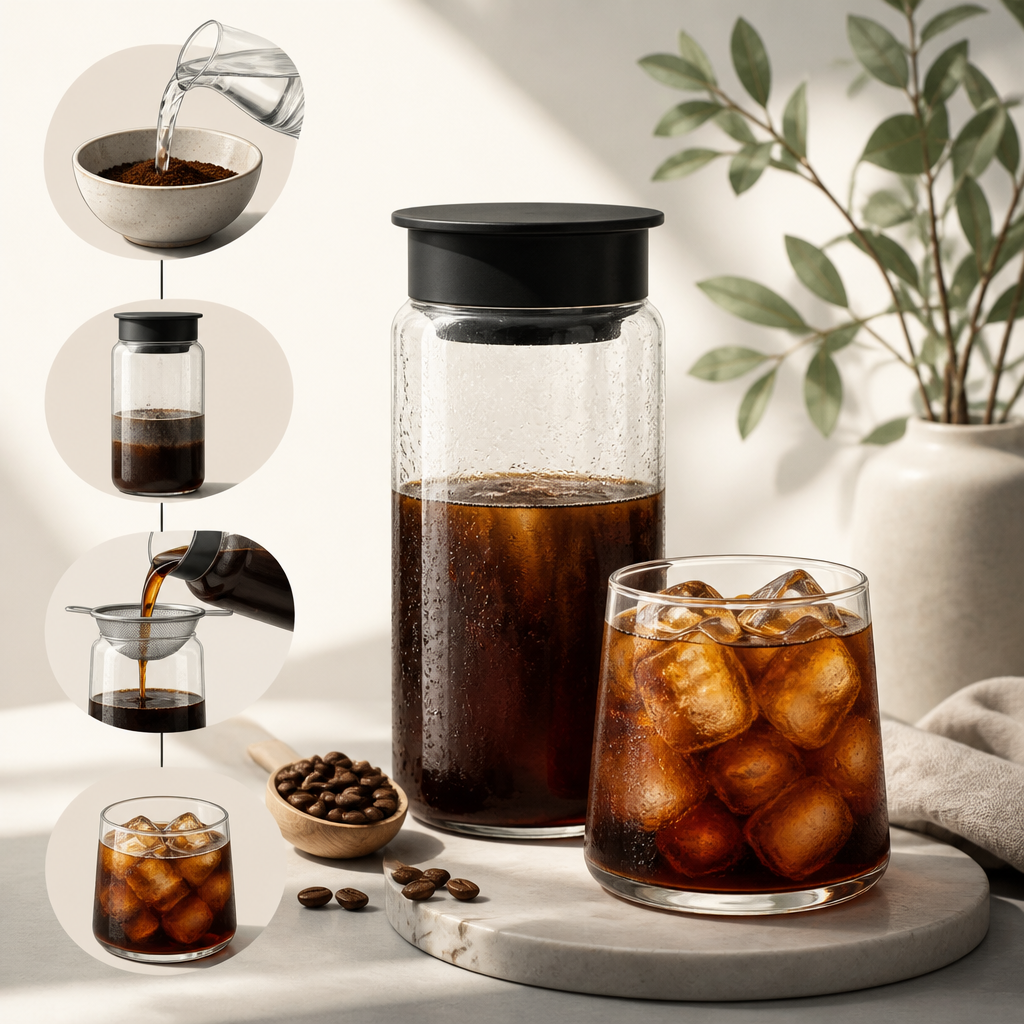
Start by grinding your beans coarsely, with particles similar in size to raw sugar or coarse sea salt. Coarse grounds extract more evenly during a long soak and are easier to filter afterward. Add the grounds to a clean jar, pitcher or dedicated cold brew maker, then pour in filtered water. Stir gently until all the grounds are saturated.
For ready-to-drink cold brew, begin with a ratio of 1 part coffee to 8 parts water. For example, use 100 grams of coffee with 800 grams of water. This creates a balanced brew that can usually be poured over ice and enjoyed as is, or softened with a splash of milk.
If you prefer to make a concentrate, use about 1 part coffee to 4 parts water. A concentrate saves refrigerator space and gives you flexibility at serving time. Dilute it with water, milk or a plant-based alternative until it tastes right to you.
Cover the container and steep for 12 to 18 hours. You can steep it in the refrigerator for a consistently cool, mellow result, or at cool room temperature if your kitchen is not warm. A shorter steep produces a lighter drink, while a longer steep creates more depth and strength.
When steeping is complete, filter carefully. First pour the mixture through a fine-mesh strainer to remove the larger grounds, then use a paper coffee filter, cloth filter or built-in brewer filter for a cleaner finish. Avoid squeezing the grounds, which can push sediment into the coffee. Chill the filtered brew, pour it over ice and enjoy its smooth, refreshing flavor.
How to Fine-Tune Your Brew
How to Fine-Tune Your Brew
Once you have tried the basic method, small adjustments can help you shape the cup around your preferences. Steeping longer generally produces a stronger, fuller cold brew, but more time is not always better. After a certain point, the coffee can take on heavier, woody or slightly dull flavors. If your first batch tastes good at 14 hours, try 16 hours next time rather than making a dramatic change.
Grind size matters just as much. Coarse grounds are ideal because they extract slowly and are easy to filter. Very fine grounds can overextract, creating bitterness, cloudiness and a muddy layer of sediment at the bottom of your glass. They can also clog paper filters and make the process frustratingly slow. A consistent coarse grind from a burr grinder is especially helpful.
Use filtered water when possible. Since water makes up nearly the entire drink, strong mineral, chlorine or off flavors in tap water can show up clearly in the finished brew. Clean, neutral-tasting water lets the character of the beans come through.
If your cold brew is weak, try using a little more coffee, steeping slightly longer or reducing dilution when serving. If it is too strong, dilute it with cold water, milk or ice. Bitter or woody coffee may need a shorter steep, a coarser grind or gentler filtering. For muddy cold brew, use a coarser grind and filter it again through paper or a fine cloth filter.
Keep a few simple notes on your ratio, grind, steeping time and serving dilution. These details make it much easier to repeat a favorite Cold Brew Taste, and they turn each batch into a useful experiment rather than a guessing game.
Serving Ideas and Easy Cold Brew Recipes
Serving Ideas and Easy Cold Brew Recipes
The simplest way to enjoy cold brew is also one of the best: fill a glass with ice, pour in the coffee, then add water, milk or a favorite plant-based alternative to suit your taste. If you made a ready-to-drink batch, it may need little or no dilution. With concentrate, start with equal parts concentrate and water or milk, then adjust from there.
A few small additions can give your drink a new character without covering up the coffee’s flavor. Try vanilla syrup for a coffee-shop-style treat, cinnamon for gentle warmth, or simple syrup and honey for sweetness. A tiny pinch of salt can also soften bitterness and bring out chocolatey notes, especially in a darker roast.
For an easy cold brew latte, combine cold brew concentrate with milk and ice, then sweeten if desired. Make an iced mocha by stirring chocolate syrup or cocoa powder into the coffee before adding milk. For creamy shaken cold brew, shake coffee, ice, a little sweetener and a splash of milk in a sealed jar or cocktail shaker, then pour it into a fresh glass. The shaking creates a light, foamy texture.
Coffee tonic is a bright alternative for warm days. Fill a glass with ice, add sparkling water, then slowly pour in cold brew concentrate. A slice of orange or lemon can complement fruity coffee beans particularly well.
Cold brew concentrate is useful beyond the glass, too. Blend it into smoothies, add it to milkshakes, or use it in brownies, cakes and other desserts that call for coffee flavor. Whatever you make, dilute concentrate gradually and taste as you go. Its strength varies from batch to batch, and a little can go a long way.
Storing Cold Brew and Enjoying Your Perfect Cup
Storing Cold Brew and Enjoying Your Perfect Cup
Once your cold brew has been filtered, transfer it to a clean, sealed container and keep it in the refrigerator. An airtight glass bottle, jar, or pitcher helps preserve its flavor and prevents the coffee from picking up odors from other foods.
For the freshest Cold Brew Taste, aim to drink your batch within 7 to 10 days. It is often at its best during the first few days, when the flavor is especially smooth and lively. Over time, cold brew can begin to taste flatter or develop less appealing notes, so making smaller batches may be a good choice if you drink coffee only occasionally.
A satisfying cup comes down to a few simple habits: start with beans you enjoy, grind them coarsely, use a ratio suited to the strength you want, steep patiently, and filter thoroughly. Those basics give you a clean, balanced brew whether you prefer it black over ice, softened with milk, or mixed into a latte or coffee tonic.
Remember that cold brew is meant to be flexible. Try a different roast, adjust the steeping time by an hour or two, or change how much water or milk you add to a concentrate. Keeping brief notes on your favorite batches can make it easier to recreate them later.
The clear takeaway: store filtered cold brew cold and sealed, enjoy it within about a week, and keep experimenting until you find the smooth, refreshing cup that tastes just right to you.