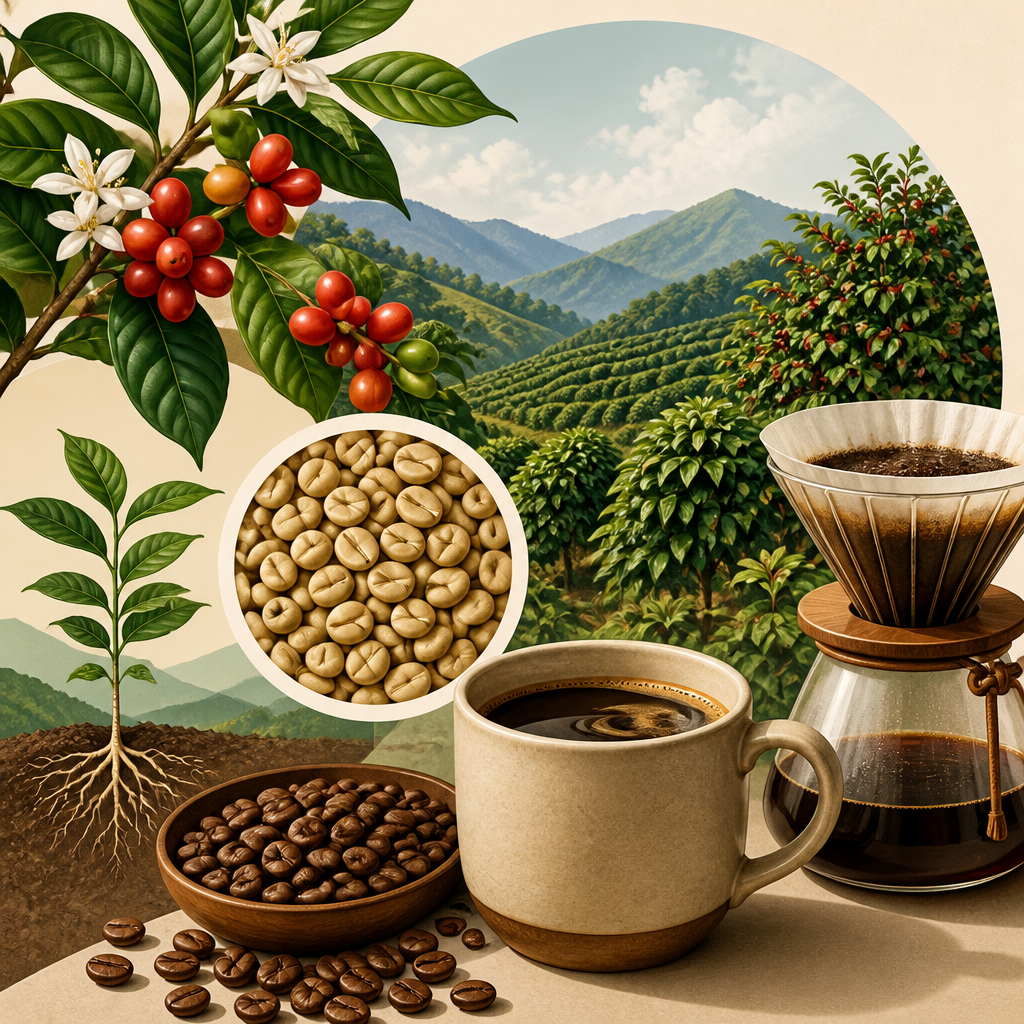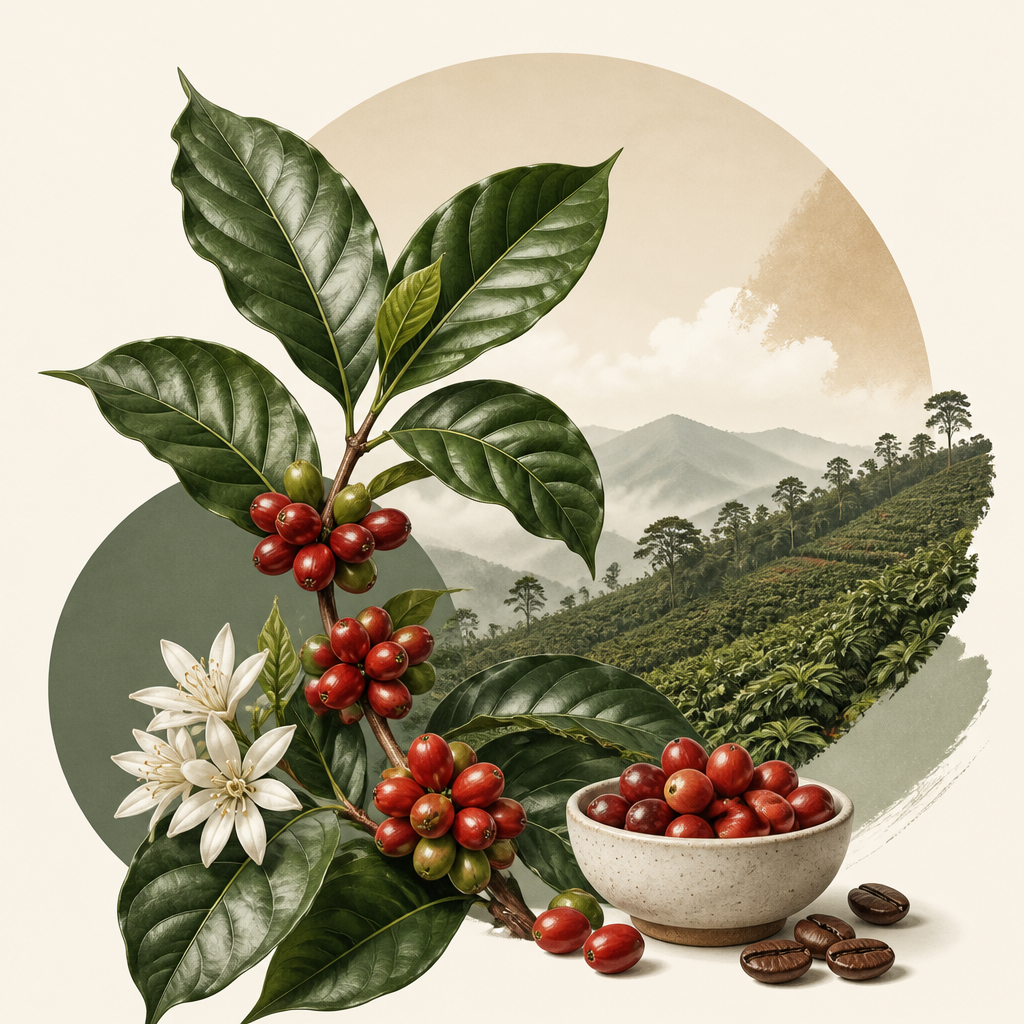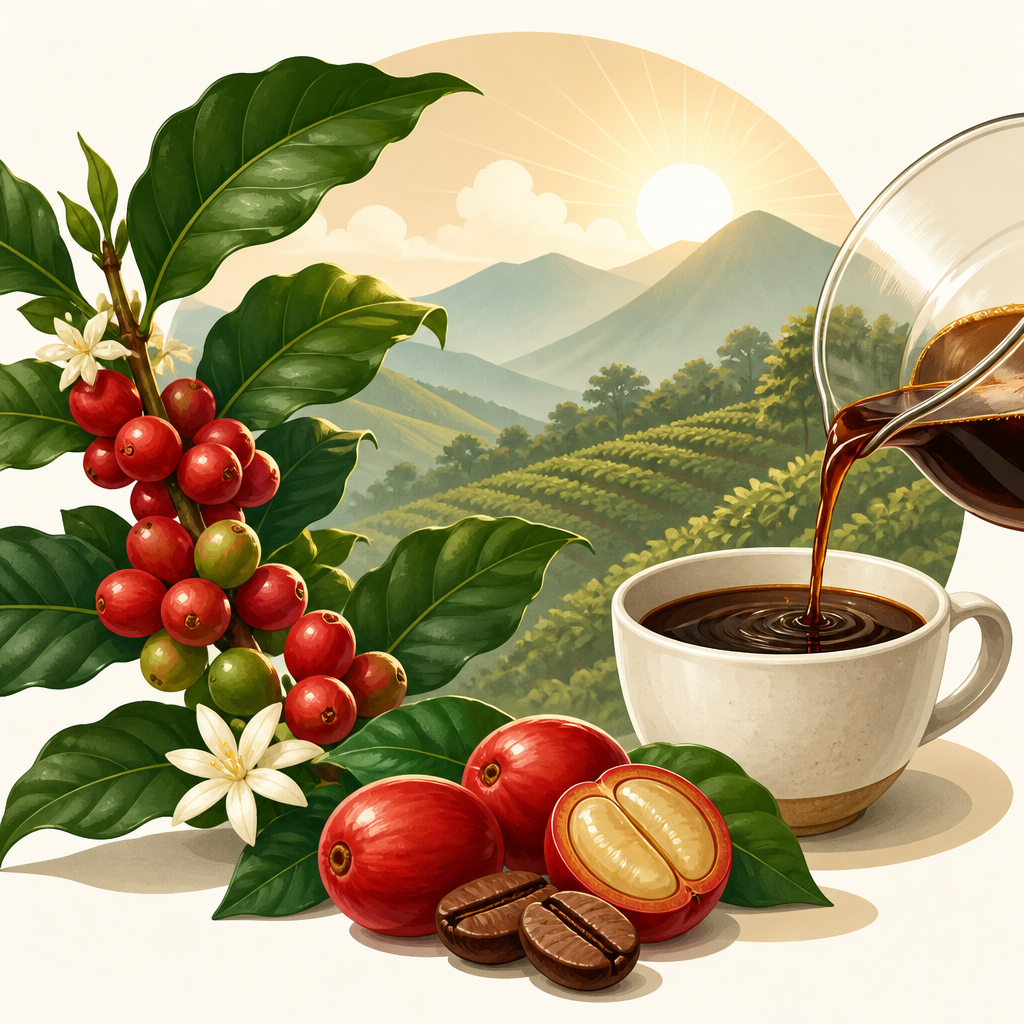

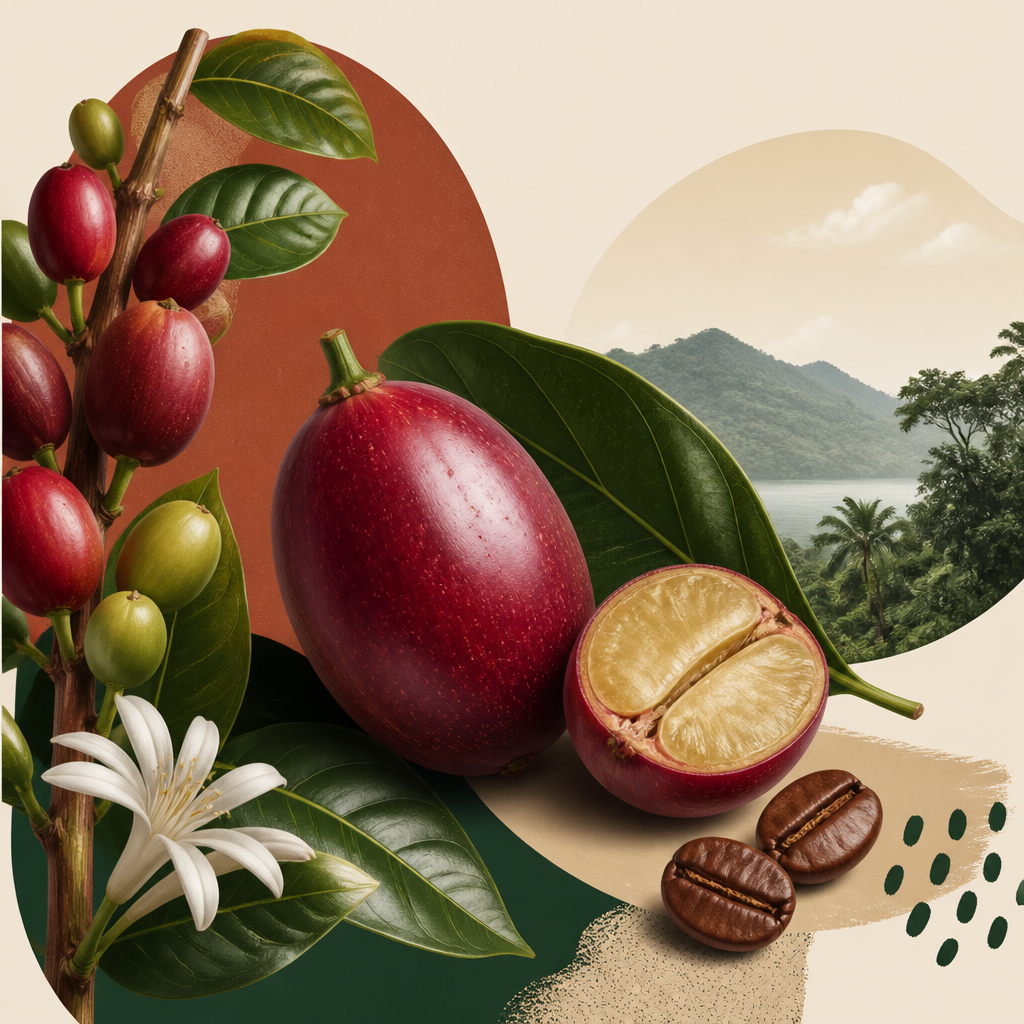
Meet Liberica Coffee, the Bean That Stands Apart
Meet Liberica Coffee, the Bean That Stands Apart
If your coffee routine has started to feel a little predictable, Liberica may be the bean that wakes up more than your morning. This rare and characterful coffee is gaining attention among curious drinkers who want to look beyond the familiar tastes of supermarket Arabica blends and strong Robusta brews.
Liberica is one of the main commercial coffee species, alongside Arabica and Robusta. Yet it remains far less common on the world market. Most coffee drinkers have encountered Arabica, known for its smooth sweetness and lively acidity, or Robusta, valued for its intensity and crema. Liberica, by contrast, has stayed something of a regional treasure, particularly in parts of Southeast Asia, where it has a devoted following.
That relative rarity is part of its charm, but Liberica has plenty more to offer than novelty. Its cup can be bold, full-bodied, and surprisingly layered, with flavors that may lean fruity and floral or move toward woody, smoky, and dark chocolate-like notes. It is coffee with a clear personality, and it can be especially appealing to anyone who enjoys a richer, more unusual brew.
The trees themselves are just as distinctive. Compared with many coffee plants, Liberica trees can grow remarkably tall and are known for their hardy nature. Their beans are unusually large too, hinting at the fact that this is not simply another variation on the coffees many of us already know.
For adventurous coffee lovers, Liberica offers a chance to discover a different side of the coffee world. From its striking plants to its memorable flavor, it is a bean that invites a fresh look, and a slow, thoughtful first sip.
What Is Liberica Coffee?
What Is Liberica Coffee?
Liberica coffee comes from Coffea liberica, a coffee species native to the tropical forests of West and Central Africa. It later traveled far beyond its original home, gaining an important foothold in Southeast Asia, particularly in the Philippines, Malaysia, and Indonesia. In the Philippines, it is widely known as kapeng barako, a name often associated with its powerful aroma and distinctive character.
At first glance, Liberica beans look noticeably different from the familiar beans used for most Arabica and Robusta coffees. They are among the largest commercial coffee beans, often nearly twice the size of Arabica beans. Their shape is equally recognizable: rather than being evenly oval, a Liberica bean tends to be asymmetrical, with a curved, almond-like form and an irregular central crease. Those visual differences reflect the plant itself, which grows much larger than many other coffee trees.
Liberica is also closely connected to Excelsa coffee, a name that can cause some confusion. Excelsa was once classified as its own species, Coffea excelsa, but it is now commonly treated as a variety within the broader Coffea liberica family, often written as Coffea liberica var. dewevrei. Even so, it retains a distinct identity in the coffee market.
While classic Liberica is often known for its heavy body and woody, smoky, or fruity notes, Excelsa is frequently described as having a brighter, tarter profile, sometimes with dark-fruit or tangy notes. Both are less common than Arabica and Robusta, but they offer coffee drinkers a welcome reminder that the coffee world is far more diverse than it first appears.
A Short History of Liberica’s Global Journey
A Short History of Liberica’s Global Journey
Liberica’s place in coffee history grew during a crisis. In the late 19th century, coffee leaf rust spread through major growing regions, devastating many Arabica plantations. The fungal disease was particularly damaging in places where farms relied heavily on a single coffee species. Growers began looking for alternatives that could better withstand difficult conditions, and Coffea liberica drew new attention.
Native to West and Central Africa, Liberica was introduced to parts of Southeast Asia as producers searched for more resilient crops. It became especially significant in the Philippines, where it is known as kapeng barako, as well as in Malaysia and Indonesia. Its tall trees, large cherries, and ability to cope with some disease pressure made it a practical choice for farmers rebuilding or diversifying their coffee production.
For a time, Liberica seemed poised to become a much bigger part of the global coffee trade. Yet Arabica eventually recovered its leading role, helped by its widely loved sweetness, aroma, and established market demand. Robusta also expanded rapidly because it offered high yields, strong caffeine content, and relative hardiness, often at a lower cost to produce.
Liberica did not disappear, but it became a more regional specialty. Its trees can be harder to manage because of their height, and its distinctive flavor does not always match the expectations of drinkers used to mild Arabica blends. Still, that individuality has helped preserve its appeal. In Southeast Asian coffee cultures and among specialty coffee enthusiasts, Liberica remains a valued bean with a loyal following, carrying a story of adaptation, resilience, and local tradition in every cup.
What Does Liberica Coffee Taste Like?
What Does Liberica Coffee Taste Like?
Liberica is often described as a coffee with presence. It tends to produce a full, bold body and a layered flavor that can feel surprising on the first sip, especially for people accustomed to familiar Arabica blends. Rather than tasting simply strong or bitter, a well-prepared cup may reveal fruity notes reminiscent of jackfruit, berry, or ripe tropical fruit, alongside floral aromas and a deep, lingering sweetness.
Its more unusual side is part of the appeal. Many Liberica coffees carry woody, smoky, or earthy tones, sometimes joined by dark chocolate, toasted grain, spice, or nutty notes. These flavors can give the cup a rich, almost rustic character. Some drinkers love that complexity immediately, while others need a cup or two to appreciate its distinctive profile.
As with any coffee, origin and preparation make a real difference. Liberica grown in the Philippines may taste quite different from beans grown in Malaysia or Indonesia. Natural processing can emphasize fruitiness and sweetness, while washed processing may create a cleaner, more structured cup. Roast level matters too: lighter roasts can highlight floral and fruit-like notes, while medium-dark and darker roasts tend to bring forward chocolate, smoke, and deeper woody flavors.
Compared with Arabica, Liberica is usually less bright and delicately sweet, but more intense and heavy-bodied. Compared with Robusta, it can be just as bold in character without leaning as strongly into Robusta’s sharp bitterness or rubbery edge. For a first cup, expect something rich, aromatic, and a little unexpected. It is coffee for people who enjoy discovering flavors beyond the usual smooth, familiar profile.
Benefits of Liberica Coffee Beans
Benefits of Liberica Coffee Beans
Beyond its memorable flavor, Liberica can offer many of the everyday pleasures associated with coffee. Like other coffee species, Liberica beans contain naturally occurring compounds with antioxidant activity. Antioxidants help protect cells from oxidative stress, although a cup of coffee should be viewed as one part of an overall varied diet rather than a health solution on its own.
Liberica also contains caffeine, which can support alertness, concentration, and a welcome sense of energy for many people. The exact caffeine level can vary with the bean, roast, serving size, and brewing method, so it is difficult to make a single claim that applies to every cup. A strong espresso or large French press serving will naturally deliver more caffeine than a small, lightly brewed cup.
One of the more immediate benefits of Liberica coffee beans is simply how satisfying they can be for people who prefer a substantial coffee experience. Its full body and intense, layered flavor may feel especially rewarding when you want a coffee that stands up to milk, a hearty breakfast, or a quiet slow-brewing ritual. Because the taste is so distinctive, some drinkers may find that a smaller serving feels perfectly satisfying.
As with any coffee, comfort and enjoyment depend on the individual. People who are sensitive to caffeine may prefer a smaller cup, an earlier drinking time, or a half-caffeinated blend. Added syrups, sugar, cream, and flavored toppings can also change the nutritional picture considerably.
Research specifically focused on Liberica remains much more limited than research on Arabica, and broad health claims deserve caution. Still, when enjoyed in sensible amounts, Liberica can be a flavorful, antioxidant-containing coffee choice that brings both energy and variety to a daily routine.
Cultivating Liberica Coffee Beans
Cultivating Liberica Coffee Beans
Cultivating Liberica coffee beans begins with a plant that looks quite different from the compact coffee shrubs many people picture. Liberica trees are notably tall and robust, capable of reaching impressive heights when left unpruned. On commercial farms, growers usually prune them to make harvesting more manageable, but their naturally vigorous growth remains one of the species’ defining traits.
Liberica thrives in warm, humid tropical environments with reliable rainfall. Its roots are in West and Central Africa, yet it has also adapted well to parts of Southeast Asia, including the Philippines, Malaysia, and Indonesia. Healthy trees need well-draining soil, steady moisture, and enough nutrients to support their large leaves, cherries, and substantial bean development.
The species has a reputation for handling some difficult conditions better than delicate Arabica plants. It can show resilience against certain pests and diseases, including challenges that have harmed other coffee crops. That does not make it a low-effort crop, however. Farmers still need to manage soil fertility, control weeds, monitor plant health, and protect cherries from weather damage and pests.
Quality also depends heavily on work after the cherries ripen. Selective harvesting is important because cherries on the same tree may mature at different times. Workers pick ripe cherries, then the crop is processed through methods such as drying or fermentation before the beans are washed, dried further, hulled, and sorted. Each stage takes care and labor, especially when producers aim for the clean, layered flavors specialty coffee drinkers expect.
This combination of hardy trees and hands-on production helps explain why Liberica remains distinctive. It may be resilient in the field, but exceptional cups still begin with patient, skilled farming.
How to Prepare Liberica Coffee Beans
How to Prepare Liberica Coffee Beans
To get the most from Liberica, start with freshly roasted whole beans and grind only what you need just before brewing. Its aromatic character can be especially expressive, with notes that may lean fruity and floral or deeper and woodier. Grinding at the last minute helps keep those aromas in the cup rather than letting them fade in the container.
A medium to medium-dark roast is an easy place to begin. It usually brings out Liberica’s full body and dark chocolate-like richness while leaving room for its unusual fruit and spice notes. Once you know the bean, try other roast levels. A lighter roast may highlight brighter, more floral flavors, while a darker roast can emphasize smoky, roasted depth.
Different brewers reveal different sides of the coffee:
- A French press produces a weighty, full-bodied cup that suits Liberica’s bold personality.
- A pour-over offers more clarity, making it easier to notice delicate fruity or floral notes.
- A drip brewer is a convenient everyday choice with balanced results.
- An espresso machine or moka pot creates a concentrated, intense cup, ideal for those who enjoy a powerful coffee or milk-based drinks.
Use clean, filtered water whenever possible, as water quality can noticeably affect flavor. Match the grind to your brewer: coarse for a French press, medium for drip or pour-over, and fine for espresso or moka pot. Begin with a standard ratio of about 1 gram of coffee to 15 to 17 grams of water, then adjust the amount, grind, or brewing time to suit your taste.
Liberica also pairs well with uncomplicated foods that do not compete with its character. Try it alongside a buttery pastry, dark chocolate, toasted nuts, or a savory breakfast. Whether brewed gently or served strong, it is a coffee that rewards a little curiosity.
Why Liberica Deserves a Place in Your Coffee Routine
Why Liberica Deserves a Place in Your Coffee Routine
If your usual coffee routine has started to feel predictable, Liberica offers a genuinely different direction. It is not simply a stronger version of a familiar cup. With its bold body, layered aroma, and notes that may lean fruity, floral, woody, smoky, or chocolatey, Liberica brings a sense of discovery to everyday brewing.
Its story makes it even more interesting. Native to Africa and later embraced across parts of Southeast Asia, Liberica played an important role when coffee leaf rust threatened Arabica crops in the late 1800s. Today, it remains less common than Arabica or Robusta, which is part of its appeal. Choosing it supports a wider, more diverse coffee world than the usual supermarket shelf suggests.
Liberica also stands apart before it ever reaches the grinder. Its trees are famously hardy and can grow much taller than typical coffee plants, while the beans themselves are unusually large and distinctively shaped. Growing, harvesting, and processing these beans still takes skill and care, especially when producers aim for the clean, complex flavors specialty coffee drinkers enjoy.
The easiest way to start is with a small bag from a reputable specialty roaster. Look for clear information about the origin, roast date, and processing method, then brew it with an open mind. You may love it black for its full character, soften it with milk, or explore it through a slow pour-over or rich French press.
The takeaway is simple: Liberica is a memorable coffee worth trying, especially for anyone ready to make a daily cup feel new again.