

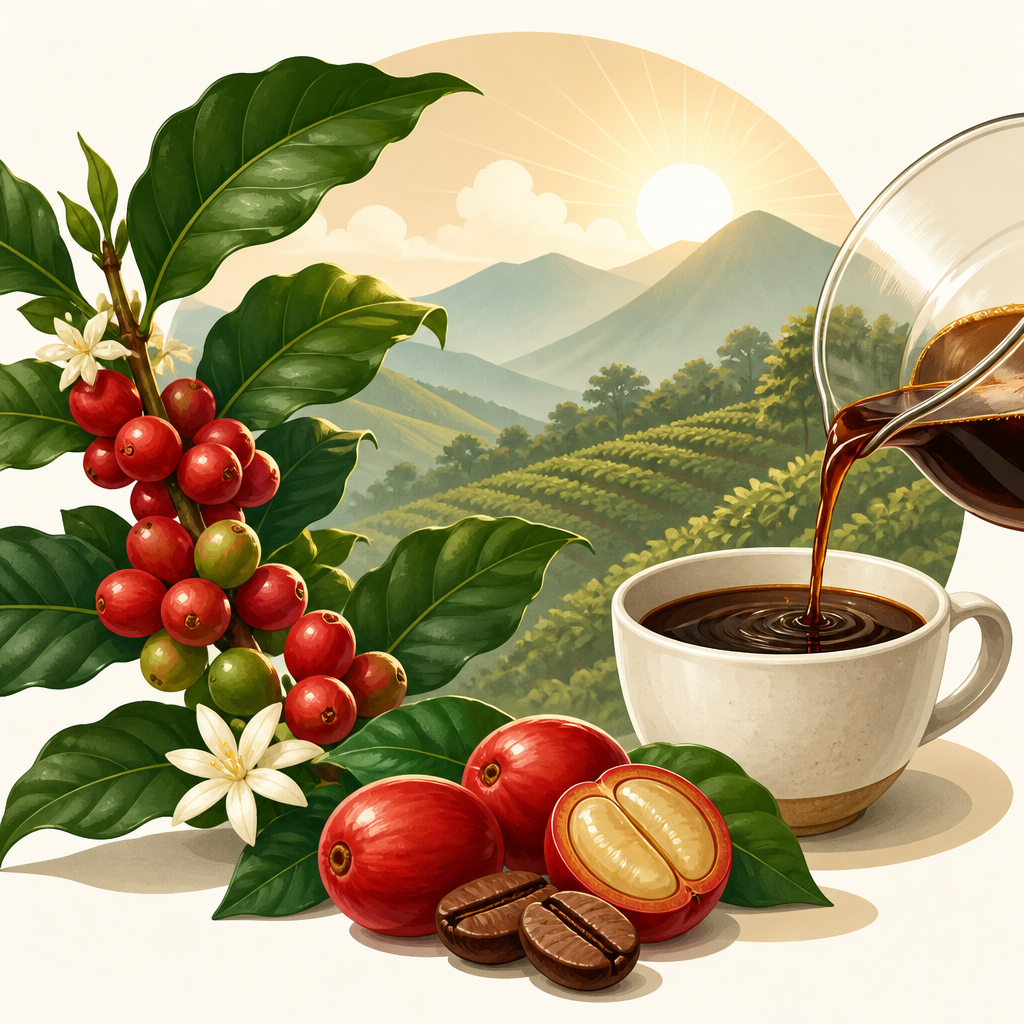
Meet Caturra: A Small Coffee Plant With a Big Reputation
The next time a cup of coffee surprises you with a juicy hint of citrus, a touch of caramel sweetness or a crisp, lively finish, Caturra may be part of the story. This influential coffee variety is a favorite among growers, roasters and curious drinkers because it can deliver bright, expressive cups without being an obscure specialty-only oddity. Caturra appears in coffees enjoyed every day, from a clean Colombian pour-over to a rich Costa Rican espresso.
Caturra is a variety of Coffea arabica, the species behind many of the world’s most prized coffees. It began as a natural mutation of Bourbon, another celebrated Arabica variety. First identified in Brazil in the early 20th century, Caturra stood out because it grew shorter than typical Bourbon plants. From there, it spread widely through Latin America, finding a home in coffee-growing countries including Colombia, Costa Rica, Guatemala, Nicaragua and Peru.
Its small stature is more important than it might sound. Compact plants can be easier for farmers to manage, prune and harvest, and they may be planted more densely than taller varieties. Caturra can also produce dependable yields when it receives careful attention, including suitable nutrition, disease management and growing conditions.
For coffee drinkers, though, the real excitement is in the cup. Well-grown Caturra often offers appealing brightness, sweetness and a clear sense of place. Its flavor can range from citrus and red fruit to chocolate, floral notes and brown-sugar-like caramel, depending on where it was grown and how it was processed.
That combination of practical farming traits and vivid flavor explains Caturra’s enduring reputation. It is a modest-looking plant with the potential to make a genuinely memorable morning coffee.
What Makes Caturra Coffee Different?
What Makes Caturra Coffee Different?
Caturra stands out first in the field. It is a compact, naturally occurring mutation of Bourbon, with a dwarf-like growth habit that keeps the plant shorter than many traditional Arabica trees. Its branches tend to grow close together, and its dense, deep-green leaves give a healthy Caturra plot a particularly full appearance.
That small stature is more than a visual detail. Compared with taller coffee varieties, Caturra can be easier for farmers to manage. Planting at closer spacing may be possible, while pruning, checking for pests and diseases, and picking ripe cherries can require less reaching and ladder work. These traits have helped make Caturra attractive to growers looking for a productive plant that fits intensive, carefully managed farms.
Still, “dwarf” does not mean effortless. A compact Caturra plant can produce generously, but it needs appropriate nutrition, pruning, and attention to growing conditions to perform at its best. High yields can also place demands on the plant, so good farm practices matter.
It is also useful to clear up a common point of confusion: Caturra is an Arabica variety, not a separate coffee species. In other words, it belongs to Coffea arabica, alongside varieties such as Bourbon, Typica, and many others. Its genetic background influences its plant shape and flavor potential, but it does not determine every detail of the cup.
Like all quality coffee, Caturra reflects terroir, the combined influence of location, elevation, climate, soil, and farm practices. Processing matters too. The same variety may taste crisp and citrusy when washed, or rounder and fruitier when naturally processed. Caturra provides the starting point, while the farm and the producer shape the final experience.
Where Caturra Grows Best
Where Caturra Grows Best
Caturra is grown across much of Latin America, where warm temperatures and mountain landscapes create excellent conditions for high-quality Arabica. Colombia is especially well known for Caturra, which has long been an important part of the country’s coffee production. It is also widely cultivated in Costa Rica, Guatemala, Nicaragua, Peru, and its native Brazil. Each place gives the variety a slightly different expression in the cup.
Altitude is one of the biggest influences. At higher elevations, cooler temperatures slow the ripening of coffee cherries. That longer development period can help build more complex sugars and acids, often producing a cup with lively citrus notes, red-fruit character, floral hints, and a crisp finish. A high-grown Caturra from the mountains of Guatemala or Colombia may feel bright and structured, for example.
At lower elevations, cherries tend to mature more quickly in warmer conditions. The resulting coffees can still be delicious, but they often lean toward a softer acidity, fuller body, and gentler sweetness. This range is one reason Caturra can be so interesting to explore from region to region.
Climate matters beyond elevation, too. Coffee generally thrives where temperatures are mild to warm without excessive heat, rainfall is dependable but balanced by a dry period for harvesting, and soils drain well while supplying useful nutrients. Volcanic soils in parts of Central America can contribute to fertile growing conditions, while mineral-rich mountain soils elsewhere may support distinct flavor development.
Shade also plays a role. Some farms grow Caturra beneath trees, which can moderate temperatures, protect plants from intense sun, and support biodiversity. Others use more open planting systems. Neither approach guarantees quality on its own, but thoughtful management helps farmers guide Caturra toward its brightest, most expressive potential.
The Flavor Profile: What Does Caturra Taste Like?
The Flavor Profile: What Does Caturra Taste Like?
In the cup, Caturra is often loved for its lively, approachable character. Many examples have a bright citrus-like acidity, which may bring to mind orange, lemon, mandarin, or grapefruit. Depending on where and how it is grown, that brightness can be joined by red berry flavors such as cherry, raspberry, or currant.
Caturra also has a pleasing sweetness that helps keep its acidity balanced rather than sharp. A medium roast may reveal caramel, brown sugar, milk chocolate, or cocoa notes, while especially refined high-altitude lots can show delicate floral aromas. The result is often a cup that feels clean, sweet, and energetic, with enough complexity to reward slow sipping without being difficult to enjoy.
Processing makes a major difference. Washed Caturra, in which the fruit is removed before the beans are dried, commonly tastes crisp and transparent. It can highlight citrus, floral notes, and the distinctive character of the growing region. Natural-process Caturra, dried inside the coffee cherry, often leans toward fuller body and more pronounced fruit, with jammy berry or tropical impressions. Honey-processed coffees frequently sit between those styles, combining rounded sweetness and body with a bright, fruit-forward finish.
Still, variety is only one part of the flavor story. A Caturra from Colombia may taste very different from one grown in Costa Rica, Guatemala, or Peru. Elevation, soil, climate, harvest timing, and processing all shape the result. Roast level matters too: lighter roasts tend to preserve acidity and fruit, while darker roasts bring deeper chocolatey, nutty, or caramelized flavors. Finally, freshness and careful brewing can determine whether those appealing notes shine clearly in your cup.
Cultivating Caturra Coffee Beans: What Farmers Need to Know
Cultivating Caturra Coffee Beans: What Farmers Need to Know
Cultivating Caturra coffee beans begins with the right setting. Like other Arabica varieties, Caturra generally thrives in warm tropical climates with reliable rainfall, moderate temperatures, and well-drained, nutrient-rich soil. It can grow across a range of elevations, but high-altitude farms often produce slower-ripening cherries with more layered acidity and sweetness.
Caturra’s compact size can make farm work more manageable. Growers may plant trees relatively close together, and pruning, feeding, and harvesting can be easier than with taller varieties. Still, this productive plant needs attentive care. Regular fertilization helps replace nutrients used in cherry production, while pruning improves airflow, controls plant size, and encourages healthy new growth.
Pest and disease monitoring is equally important. Caturra can be vulnerable to coffee leaf rust, a fungal disease that weakens trees by damaging their leaves. Risk varies by region, weather, elevation, and local disease pressure, but prevention often includes good field sanitation, appropriate spacing, shade management, and timely treatment where needed. Some farmers also choose rust-resistant cultivars or diversify plantings to reduce risk.
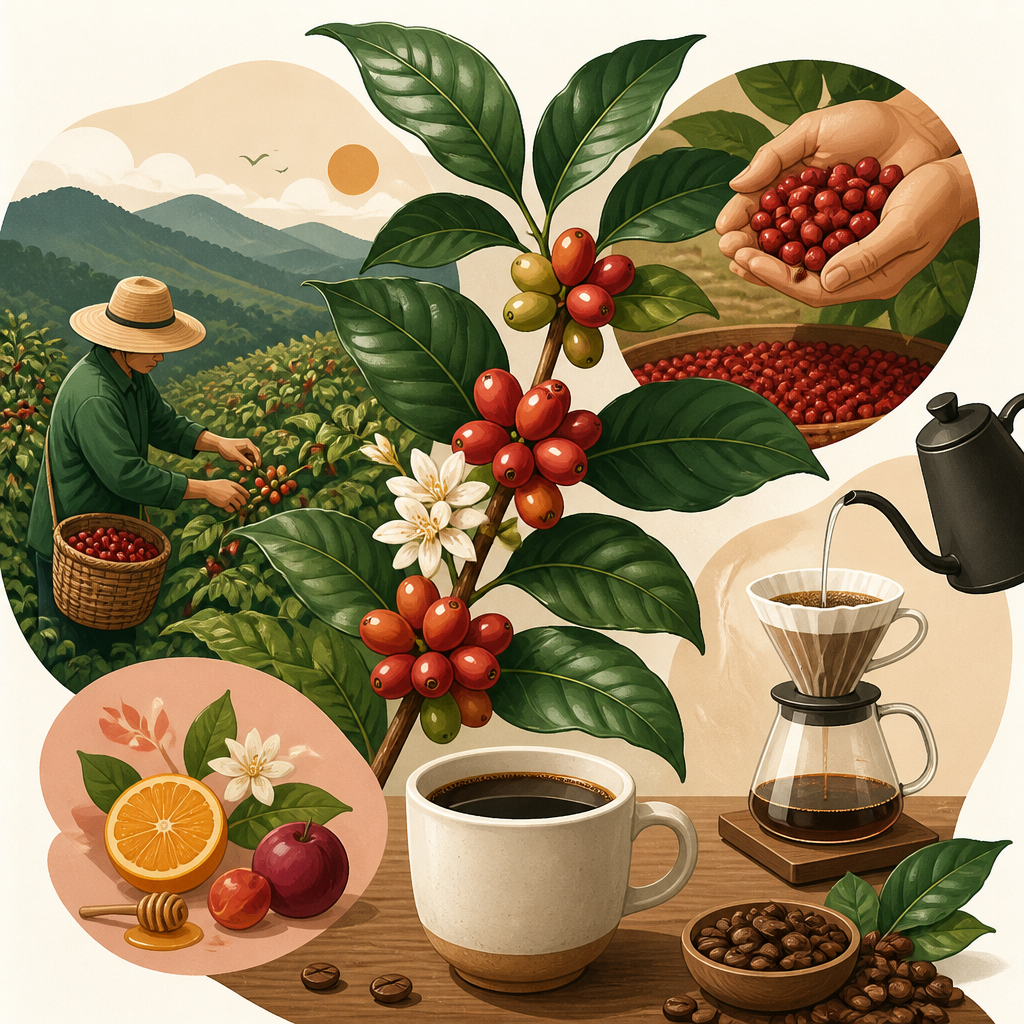
The crop’s journey starts with fragrant white flowers, usually appearing after rainfall. These flowers become green cherries that gradually ripen to red, yellow, or orange, depending on the plant type. Many quality-focused farms selectively pick only the ripest cherries, often making several passes through the same plot.
After harvest, the cherries are processed quickly. Washed processing can emphasize Caturra’s clean, bright character, while natural or honey processing may build fruitiness and body. Careful drying, storage, and milling then help preserve the hard work done in the field before the beans ever reach a roaster.
How to Prepare Caturra Coffee Beans at Home

How to Prepare Caturra Coffee Beans at Home
Wondering how to prepare Caturra coffee beans for the best cup? Start with freshly roasted whole beans, ideally used within a few weeks of the roast date. Grinding just before brewing preserves the aromatic compounds that give Caturra its lively fruit, floral, caramel, or chocolate-like character. A burr grinder is the best choice because it produces more even particles than a blade grinder, helping the coffee extract consistently.
Match your grind to your brewer:
- Coarse grind: French press and other immersion brewers
- Medium grind: Drip machines and pour-over brewers
- Fine grind: Espresso machines
Use filtered water if possible, since heavily mineralized or strongly chlorinated tap water can mute delicate flavors. A dependable starting point is a coffee-to-water ratio of about 1:16, or roughly 15 grams of coffee for 240 grams, about 8 ounces, of water. Adjust from there for personal preference: use a little more coffee for a stronger cup or slightly less for a lighter one.
Heat water to around 195 to 205°F, just below boiling. For pour-over brewing, bloom the grounds with a small amount of water for about 30 to 45 seconds, then pour slowly and evenly. This method is especially good for highlighting the clean acidity and clear fruit notes often found in washed Caturra lots.
Espresso can bring out Caturra’s sweetness, creating a concentrated cup with caramel, berry, or chocolate tones. A French press is a fine option when you prefer a fuller body and rounder texture, particularly with naturally processed coffees. Try the same Caturra in more than one brewing method to discover which side of its personality you enjoy most.
Benefits of Caturra Coffee Beans
Benefits of Caturra Coffee Beans
The benefits of Caturra coffee beans begin with their versatility in the cup. Because Caturra can express its growing region so clearly, it offers a wide range of flavor experiences. One lot may be crisp and citrusy, another may suggest red berries and florals, while a deeper roast can bring out caramel, cocoa, and nutty sweetness. Its lively acidity is especially appealing to drinkers who enjoy a bright, refreshing coffee rather than a heavy or flat-tasting cup.
Caturra also works well across many brewing styles. A carefully roasted, washed Caturra can shine in a pour-over, where its clean structure and delicate notes are easy to notice. Espresso often emphasizes its sweetness and fruit-like character, while immersion methods such as French press can give it a richer, rounder feel. That flexibility makes it an enjoyable choice for both everyday brewing and more curious coffee tasting.
There are agricultural benefits, too. Caturra’s compact plant size can allow growers to plant at higher density than they might with taller varieties. Its shorter stature can also make pruning, monitoring cherries, and harvesting more manageable, particularly on carefully tended farms. These advantages do not guarantee quality or profitability, but they can support efficient field work when paired with good soil care and disease management.
Like other coffees, Caturra contains naturally occurring antioxidants and can provide a moderate caffeine lift. Still, coffee affects people differently, and factors such as serving size, brew strength, and personal caffeine sensitivity matter more than the variety alone.
Finally, choosing traceable Caturra coffee can be rewarding. When a roaster shares the farm, region, elevation, and processing method, you can better understand why a coffee tastes the way it does. It also gives you a chance to explore regional styles while supporting producers and roasters who prioritize careful cultivation and quality.
Choosing and Enjoying Your Next Caturra Coffee

Choosing and Enjoying Your Next Caturra Coffee
Caturra is well worth seeking out if you enjoy expressive, origin-driven Arabica coffee. Its naturally lively character can show up as sparkling citrus, berry-like fruit, caramel sweetness, chocolate depth, or delicate floral notes, depending on where it was grown and how it was processed. It is a familiar variety in many coffee-growing countries, but it rarely tastes exactly the same twice.
When shopping, start with the roast date. Freshly roasted coffee is generally at its best after a short resting period and within a few weeks of roasting. Look for details beyond a broad label such as “Colombian coffee.” A good bag may identify the country, region, farm or cooperative, elevation, processing method, and variety. Those details make it easier to choose a cup that suits your preferences.
Processing information is especially useful. A washed Caturra may offer a clean, crisp cup with defined acidity, while a natural-process lot can lean fruitier and fuller. Honey-processed coffees often land somewhere in between, combining sweetness with a rounded texture. Tasting notes can also provide a helpful guide, though they are descriptions to explore rather than promises of exact flavors.
Try brewing the same Caturra in more than one way. A pour-over can bring out clarity and bright fruit notes, espresso can emphasize sweetness and concentration, and a French press can add weight and texture. Comparing Caturra lots from Colombia, Costa Rica, Guatemala, Peru, or elsewhere is another enjoyable way to notice how place shapes coffee.
The clear takeaway is simple: a well-grown, carefully prepared Caturra can turn an ordinary coffee routine into a small daily discovery.


[…] Where Catuai Comes From […]
[…] Cultivation of Maragogipe Coffee Beans […]