
Meet Catuai Coffee
Meet Catuai Coffee
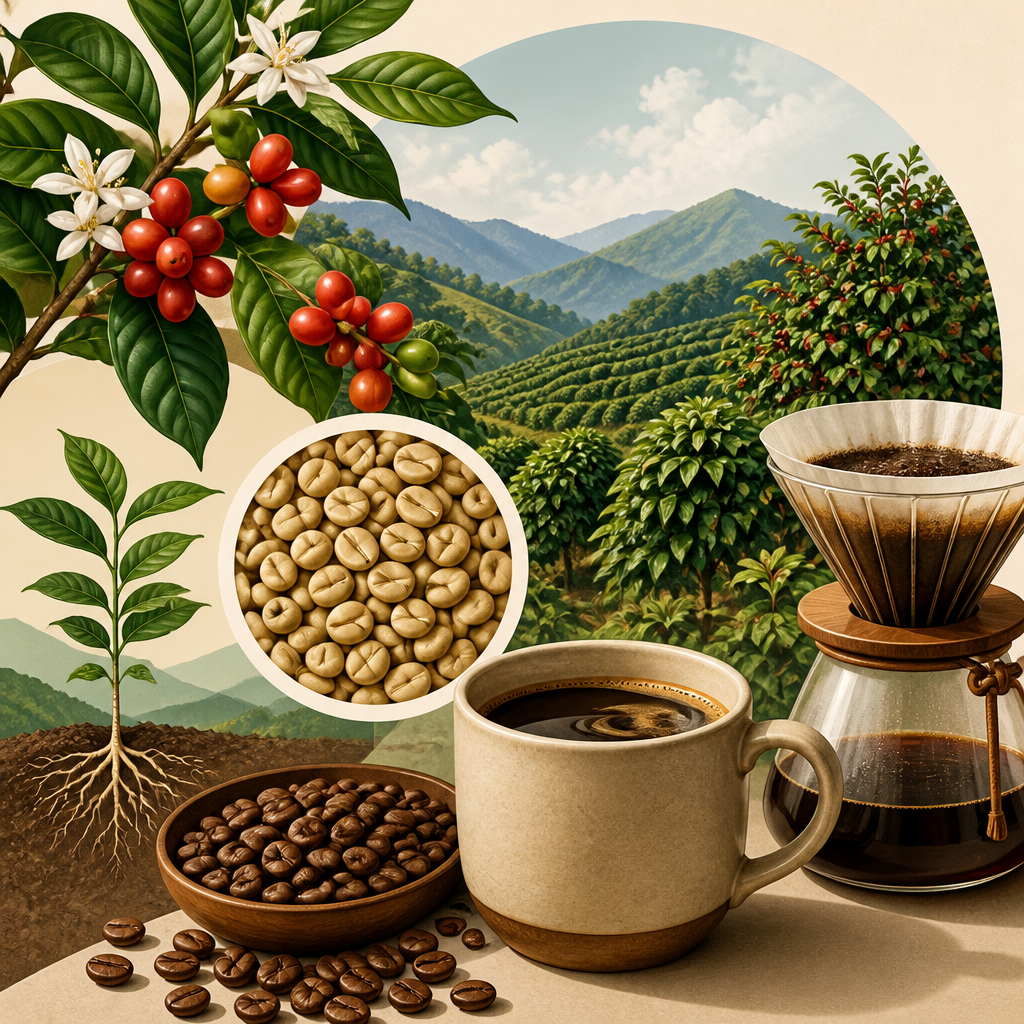
A coffee can be easy to enjoy without being boring, and Catuai is a great example. This widely grown Arabica coffee variety is known for producing cups that are sweet, balanced and comforting, with enough character to reward curious coffee drinkers. It is a familiar name on coffee bags from Brazil and Central America, though many people have tasted it without realizing the variety behind their morning brew.
Catuai was developed in Brazil by crossing two established Arabica varieties: Mundo Novo and Caturra. The goal was to combine useful traits from both plants. Mundo Novo contributed vigor and productive potential, while Caturra brought a shorter, more compact form. The resulting Catuai plant is sturdy, manageable and capable of producing reliable harvests, which helps explain its lasting popularity on farms.
For growers, compact plants can make pruning, picking and managing a coffee field more practical. Catuai also works well in relatively dense plantings, an important advantage where land and labor need to be used efficiently. For roasters, it offers a versatile foundation that can suit many roast styles, from lighter roasts that highlight fruit and citrus to fuller roasts that bring out chocolate, caramel and nutty notes.
Everyday drinkers often appreciate Catuai because its flavor is approachable. A well-grown and carefully processed lot can be smooth, gently sweet and easy to sip black, while still standing up nicely to milk.
There is much more to this coffee than one simple flavor profile. Its origins, growing conditions, processing method and roast all shape what reaches your cup. This guide explores where Catuai comes from, what it tastes like, the practical Benefits of Catuai coffee beans, the basics of Cultivating Catuai coffee beans, and How to prepare Catuai coffee beans for a satisfying brew.
Where Catuai Comes From
Where Catuai Comes From
Catuai began in Brazil during the twentieth century, when coffee researchers set out to combine useful qualities from two established Arabica varieties. They crossed Mundo Novo, known for its vigor and productive potential, with Caturra, a naturally compact plant. The result was Catuai, a variety with shorter, sturdier growth and the ability to produce dependable crops.
The work was carried out through Brazil’s coffee research programs, including the Instituto Agronômico de Campinas, often called IAC. After years of selection and field testing, Catuai was released to growers in the 1970s. Its practical farming traits soon made it an important part of Brazil’s coffee landscape, especially in areas where growers wanted productive plants that were easier to manage than tall traditional coffee trees.
Its name has a fittingly positive meaning. “Catuai” comes from an Indigenous Brazilian term, usually linked to the Guarani language, that means “very good.” For many farmers and coffee drinkers, that description has proved memorable. The variety offers agricultural reliability while also having the potential for a sweet, approachable cup.
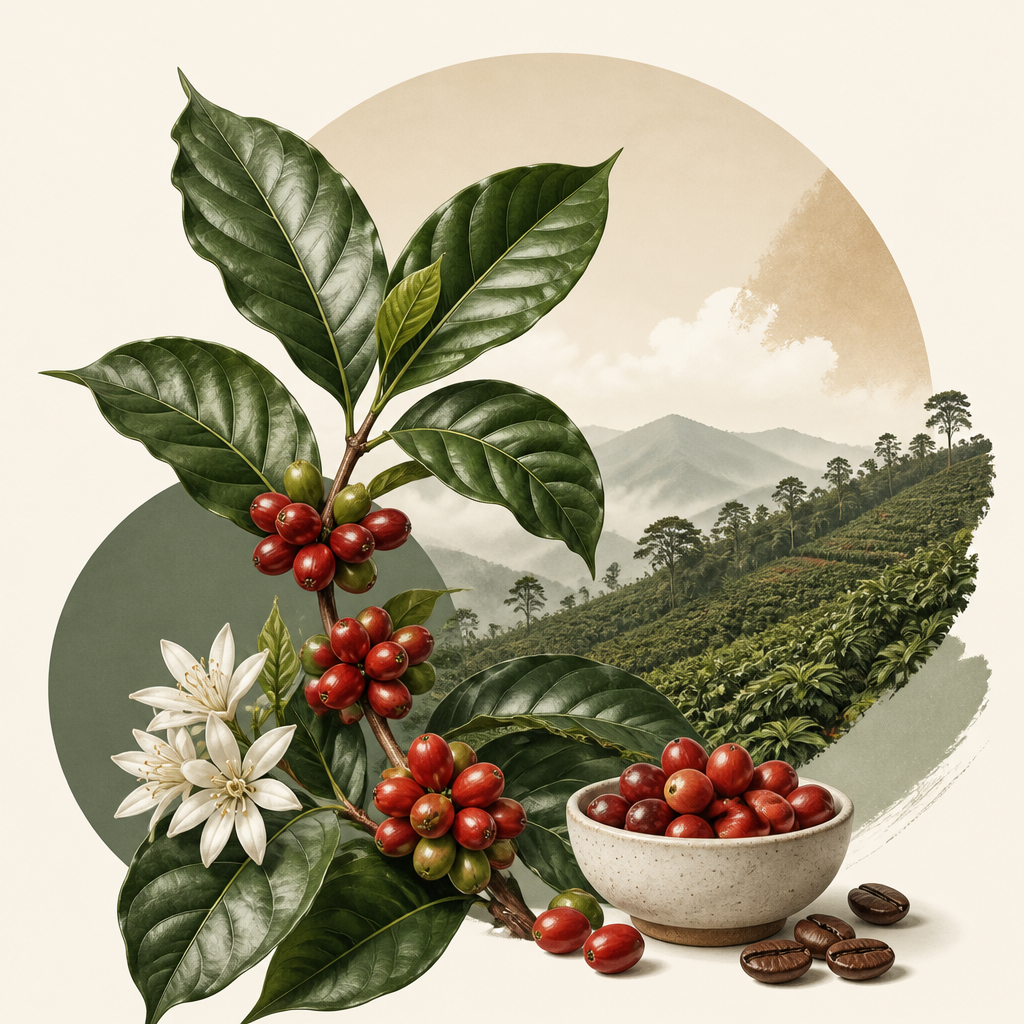
Although Brazil remains one of the most important producers of Catuai coffee, the variety has traveled far beyond its original home. It is now widely cultivated in Honduras, Guatemala and Costa Rica, as well as other parts of Central America. Each region gives Catuai a different expression. A coffee grown on a warm Brazilian farm may taste quite different from one grown at higher elevations in Guatemala or Honduras, where cooler conditions can support brighter acidity and more layered fruit notes.
This broad spread is one reason Catuai appears so often on coffee bags and café menus: it is one variety with many regional personalities.
What Does Catuai Coffee Taste Like?
What Does Catuai Coffee Taste Like?
Catuai is often appreciated for a cup that feels easy to enjoy: sweet, balanced and smooth, with a rounded body and moderate acidity. Many examples bring familiar, comforting flavors such as milk chocolate, caramel, toasted nuts or brown sugar. Depending on where and how it is grown, you may also notice citrus, red berries, stone fruit or a gentle tropical-fruit sweetness.
That range matters because a coffee variety is only one part of the flavor story. Higher-elevation Catuai, especially from cooler areas of Guatemala or Honduras, may show brighter acidity and clearer fruit notes. Coffee grown at lower, warmer elevations can lean toward a heavier body, softer acidity and deeper chocolate or nutty flavors. Soil type, rainfall, temperature and the care taken during harvesting all influence the final cup.
Processing adds another important layer. Washed Catuai coffees often taste clean, crisp and structured, allowing citrus and delicate sweetness to stand out. Natural, or dry-processed, lots can be fuller and fruitier, sometimes with jam-like berry notes. Honey-processed coffees often sit between the two, combining sweetness and body with a pleasing clarity.
You may also see Catuai described as red or yellow. These names refer to the color of the ripe coffee cherry, not a guaranteed flavor category. Red Catuai and Yellow Catuai can each produce excellent coffee, and both may taste chocolaty, nutty or fruity. In practice, origin, elevation, processing and roast level usually shape the cup more strongly than cherry color alone.
The result is a versatile coffee with plenty to explore. A Catuai from one farm may be mellow and cocoa-like, while another can be bright, citrusy and surprisingly fruit-forward.
Benefits of Catuai Coffee Beans
Benefits of Catuai Coffee Beans
Catuai is valued first for practical reasons. Its plants are relatively short, sturdy and productive, which can make them easier for farmers to manage than taller coffee trees. The variety also tends to perform well in closely spaced plantings, allowing growers to use land efficiently while maintaining good airflow and access for pruning and harvesting.
Reliable yields are another reason Catuai remains widely planted. No coffee crop is guaranteed, since weather, soil health, pests and farm practices all matter, but Catuai has a reputation for dependable production when it is grown in suitable conditions and carefully managed. This consistency can be helpful for farmers, roasters and coffee buyers who want a steady supply of quality Arabica beans.
For drinkers, the benefits of Catuai coffee beans are similar to those of other well-grown Arabica coffees. Once brewed, coffee contains naturally occurring compounds, including antioxidants, as well as caffeine. A cup may support alertness, concentration and a welcome morning ritual. Just as importantly, a thoughtfully prepared cup can simply be enjoyable, whether you prefer a smooth chocolate-like profile or a brighter, fruitier one.
Caffeine affects people differently, however. Some people enjoy several cups comfortably, while others may be more sensitive to it, especially later in the day. Choosing a serving size that suits your own tolerance is always sensible.
It is also worth remembering that Catuai is not automatically better tasting simply because of its variety name. Freshness, careful harvesting, processing, roasting and brewing have a major influence on the final cup. Well-stored, freshly roasted Catuai beans, ground just before brewing, give this approachable variety its best chance to shine.
Cultivating Catuai Coffee Beans
Cultivating Catuai Coffee Beans
Cultivating Catuai coffee beans appeals to many farmers because the plants are relatively short, sturdy and productive. Compared with taller coffee trees, Catuai is often easier to prune, inspect and harvest. Its compact shape can also make it practical for farms that use closer spacing, helping growers make efficient use of available land.
Like most Arabica coffee, Catuai grows best in warm, frost-free conditions with well-drained soil. Regular rainfall is helpful, though irrigation can support plants through dry periods where water is available. The right elevation depends on a farm’s climate and the flavor goals of its producer. Higher elevations often slow cherry development, which can encourage more complex sweetness and acidity, while warmer, lower sites may produce a fuller, softer profile.
Planting density is an important decision. Closer planting can raise production per area, but it also means growers need good airflow, careful pruning and enough nutrients for each plant. Pruning removes unproductive or overcrowded branches, keeps trees at a manageable height and can help direct energy toward healthy fruit. Farmers may grow Catuai in full sun or under managed shade, depending on local conditions. Shade trees can moderate heat and protect soil moisture, although too much shade may reduce yields or limit airflow.
Nutrition also matters throughout the growing cycle. Coffee plants need balanced soil fertility, including adequate organic matter and essential nutrients, to support leaf growth, flowering and cherry development. Soil testing helps farmers apply fertilizers or compost more precisely rather than relying on guesswork.
Catuai is dependable, but it is not trouble-free. Pests, coffee leaf rust and other diseases require regular monitoring. Drought, heavy rain and rising temperatures can further complicate production. Thoughtful farm management, from plant health checks to erosion control and timely harvesting, helps Catuai trees stay productive and produces cherries with the potential for a sweeter, cleaner cup.
From Coffee Cherry to Green Bean
From Coffee Cherry to Green Bean
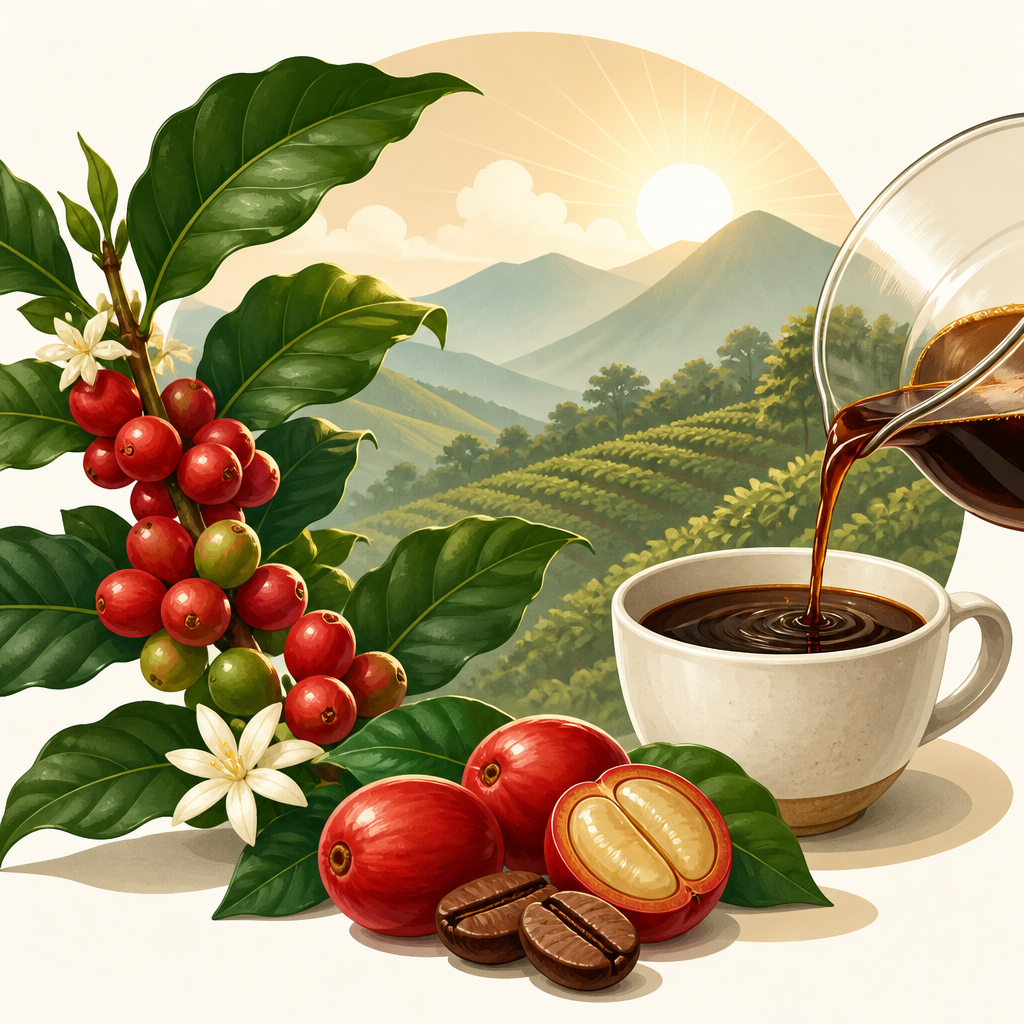
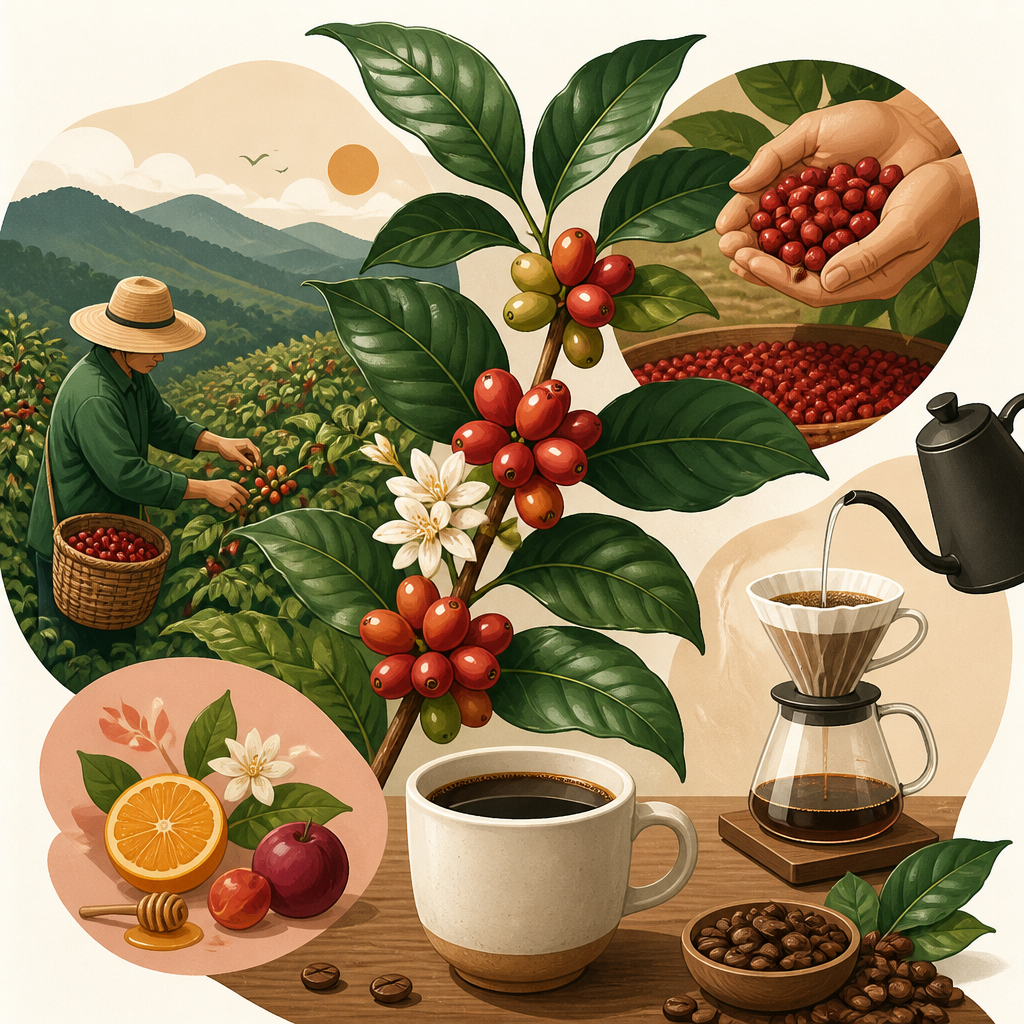
Catuai’s journey from tree to cup starts when its cherries are fully ripe. Depending on the type of Catuai, these may be bright red or yellow. On smaller farms and specialty lots, workers often pick cherries by hand, selecting only the ripest fruit over several passes through the field. Larger, flatter farms may use machines to speed up harvesting, although this can collect cherries at mixed stages of ripeness.
After harvest, the processing method has a major effect on the final coffee. With a washed process, the fruit is removed soon after picking, and the beans are fermented and washed before drying. This often produces a clean, bright cup with clear sweetness and a lighter body. In a natural process, whole cherries dry around the beans. Naturals can bring fuller body, deeper sweetness and berry-like or winey fruit notes. Honey processing removes some of the fruit skin but leaves sticky mucilage on the bean while it dries. It often sits between washed and natural coffee, combining rounded sweetness with a balanced, fruit-forward character.
Once processed, the beans must dry slowly and evenly to a safe moisture level. They are then milled to remove the protective parchment layer, sorted by size and density, and checked for defects. Careful storage matters, too. Green coffee needs protection from moisture, heat and strong odors while it waits for export or roasting.
When buying Catuai, a little label-reading can reveal a lot. Look for the country or region of origin, the processing method and a recent roast date. These details help set expectations for the cup, whether you are hoping for a crisp, clean washed coffee or a sweeter, more fruit-driven natural.
How to Prepare Catuai Coffee Beans
How to Prepare Catuai Coffee Beans
The best way to enjoy Catuai’s sweet, balanced character is to begin with freshly roasted whole beans. Buy an amount you can use within a few weeks, store it in an airtight container away from heat and light, and grind only what you need just before brewing. Fresh grinding preserves the fragrant oils that carry aromas of caramel, chocolate, nuts or gentle fruit into the cup.
For most brewing methods, grind size matters as much as the beans themselves:
- Drip coffee maker: use a medium grind, similar to regular sand.
- Pour-over: use a medium to medium-fine grind, then adjust if the brew runs too quickly or slowly.
- French press: choose a coarse grind to reduce sediment and keep the cup smooth.
- Espresso: use a fine grind, close to powdered sugar but not quite as soft.
A useful starting point for How to prepare Catuai coffee beans is a coffee-to-water ratio of about 1:16. That means 1 gram of coffee for every 16 grams of water, or roughly 20 grams of coffee to 320 grams of water. Prefer a stronger, fuller cup? Add a little more coffee. For a lighter cup, use slightly less or add more water.
Filtered water heated to around 90 to 96°C helps reveal Catuai’s sweetness without making it taste harsh. When making pour-over coffee, pour just enough hot water to wet the grounds first, then wait about 30 to 45 seconds. This short “bloom” lets trapped gas escape and supports a more even extraction.
Choose a method that suits your tastes. Pour-over brewing highlights clarity and bright details, French press brings out body and texture, while espresso creates a rich, concentrated cup. Experiment with each approach, especially when trying Catuai from different origins or processing styles.
Enjoying Catuai in Every Cup
Enjoying Catuai in Every Cup
Catuai has earned its place in coffee farms and kitchen cupboards for good reason. The plant is compact, productive and adaptable, giving growers a practical variety to work with in many coffee-producing regions. For drinkers, it often delivers something just as appealing: a sweet, balanced and easy-to-enjoy cup.
That does not mean every Catuai tastes the same. A Catuai grown high in the mountains of Guatemala may show crisp citrus, cocoa and a light, clean finish. One from Brazil might lean toward chocolate, roasted nuts and caramel. A natural-processed Catuai can bring fuller body and ripe fruit sweetness, while a washed lot may taste brighter and more delicate. Honey processing often sits somewhere in between, combining sweetness with a rounded texture.
Trying coffees side by side is one of the best ways to find your preferred style. Look at the bag for the country or farm of origin, elevation, processing method and roast date. Then make a simple comparison: brew two Catuai coffees using the same method, and notice their aroma, sweetness, acidity, body and aftertaste. You may find that you enjoy a chocolatey Brazilian Catuai as an everyday drip coffee, but prefer a fruit-forward Central American lot as a pour-over.
Ultimately, variety is only one part of the coffee story. Fresh roasting, careful storage, a suitable grind and thoughtful brewing all shape what ends up in your cup. Catuai offers a dependable starting point, with plenty of room for discovery from one origin and process to the next.
The clear takeaway is simple: the best Catuai coffee is the one that is fresh, brewed with care and genuinely enjoyable for you to drink.