
What Is Bicerin? A Sweet Turin Classic
What Is Bicerin? A Sweet Turin Classic
Few drinks feel as elegant as Bicerin, even before you take the first sip. Served in a small clear glass, this comforting specialty from Turin, Italy, brings together three beloved ingredients: strong coffee, rich chocolate and a soft crown of cream. Its beauty lies in the contrast. Dark, intense coffee meets silky drinking chocolate, while lightly whipped cream adds a cool, velvety finish.
Bicerin, pronounced roughly bee-cheh-REEN, is far more than a coffeehouse treat. It is a Turin tradition, closely woven into the city’s enduring affection for cafés, fine chocolate and unhurried conversation. The name comes from the Piedmontese word bicerin, meaning “small glass,” a fitting description of the vessel that has long defined the drink’s presentation. Rather than being hidden in a mug, its individual components are meant to be seen.
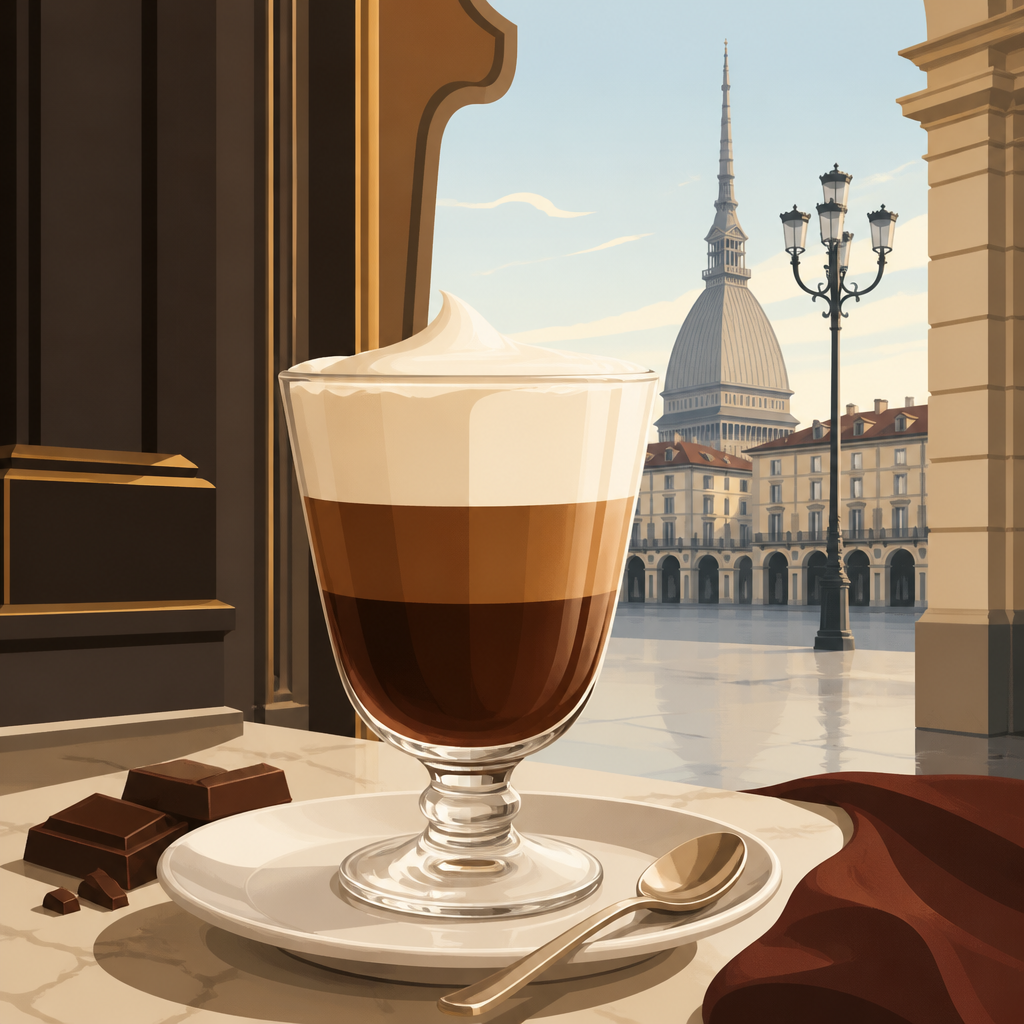
Although recipes vary slightly, a classic Bicerin is known for its distinct layers. Chocolate sits at the base, coffee forms the middle, and cream rests gently on top. These layers are generally left unstirred, so the flavor evolves with every sip. You may first taste the cream, then the dark chocolate, and finally the coffee’s roasted depth.
In the sections ahead, you will discover the history behind Turin’s famous drink, what distinguishes it from a mocha or cappuccino, and the ingredients and tools needed to make it at home. You will also learn How to prepare Bicerin with clean, attractive layers, along with a few modern serving ideas. Simple yet luxurious, Bicerin offers a small taste of Turin’s café culture in every glass.
The Story Behind Turin’s Famous Drink
The Story Behind Turin’s Famous Drink
Bicerin belongs to Turin’s long and delicious relationship with both chocolate and coffee. By the 18th century, the Piedmontese capital was already an important European center for chocolate-making, while coffeehouses had become lively places for conversation, business and social life. Bringing the two flavors together was a natural development.
The drink is generally linked to the late 1700s and to earlier local beverages that mixed coffee, chocolate and milk or cream. One predecessor was bavareisa, a warm drink often served in separate components, allowing people to combine them as they liked. Over time, the combination evolved into a more defined recipe: rich chocolate at the base, strong coffee in the middle and a soft cream topping.
No place is more closely associated with this evolution than Caffè Al Bicerin. Opened in Turin in 1763, this historic café has served the city for centuries and is widely regarded as the home of the drink in its familiar form. Its name reflects the Piedmontese word bicerin, meaning a small glass, a fitting description for a beverage designed to be enjoyed in a modest, elegant serving.
What began as one of several coffee-and-chocolate mixtures gradually became a Turin institution. Locals and visitors embraced Bicerin not simply for its sweetness, but for the contrast of flavors and textures in every sip. The café tradition around it also mattered: this was a drink for pausing, talking and savoring rather than drinking in a hurry.
Today, Bicerin remains a proud symbol of Turin. Its ingredients are simple, yet its history captures the city’s talent for turning everyday pleasures, coffee, chocolate and cream, into something distinctive and enduring.
What Makes Bicerin Different from Other Coffee Drinks?
What Makes Bicerin Different from Other Coffee Drinks?
At its heart, Bicerin brings together three familiar pleasures in one small glass: strong coffee, rich drinking chocolate and lightly whipped cream. What makes it special is not simply the ingredients, but the way they remain separate. Rather than blending everything into a uniform drink, a traditional Bicerin is built in visible layers, usually with chocolate at the bottom, coffee in the middle and a soft cap of cream on top.
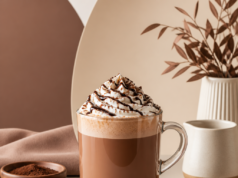
This sets it apart from a mocha, which typically combines espresso, chocolate syrup or sauce and steamed milk into one smooth, mixed beverage. A mocha is often larger, milkier and sweeter, while Bicerin has a more concentrated, more clearly defined coffee and cocoa character. It is also different from ordinary hot chocolate, where chocolate and milk take center stage without the brisk intensity of coffee.
A cappuccino may look somewhat similar because it combines coffee and milk foam, but it contains no chocolate and relies on steamed milk rather than a distinct drinking-chocolate layer. The cream in Bicerin is softly whipped, not piled high or made stiff, so it gradually melts into the warm coffee and chocolate as you drink.
The small clear glass is essential to the experience. Its transparent sides reveal the deep brown chocolate, darker coffee and pale cream, making the drink as attractive to look at as it is to taste. The glass also encourages a slower pace. Bicerin is traditionally not stirred, so each sip can offer a slightly different balance: cool, velvety cream first, then bittersweet chocolate, followed by the warmth and depth of coffee.
The Essential Ingredients for Authentic Bicerin
The Essential Ingredients for Authentic Bicerin
An authentic Bicerin relies on just three main ingredients, but their quality makes a noticeable difference. Since the drink is served in small portions and its flavors remain distinct, there is nowhere for weak coffee or overly sweet chocolate to hide.
First comes freshly brewed espresso, ideally with a full body and a slightly roasty character. A double espresso works beautifully, although very strong coffee from a moka pot or coffee maker can also produce a satisfying result. Choose a coffee you enjoy drinking on its own, as its aroma and gentle bitterness need to stand up to the chocolate and cream.
The chocolate layer should be rich, smooth and deeply cocoa-forward. High-quality dark chocolate, usually around 60 to 75 percent cocoa, gives Bicerin its traditional bittersweet depth. Avoid chocolate with too many added flavors or a waxy texture. Melted dark chocolate can be combined with a small amount of hot water, or with milk for a softer, more rounded drinking-chocolate consistency. Milk is a practical home-style adjustment, though it creates a lighter flavor than a more intense chocolate base.
Finally, heavy cream provides the drink’s signature pale top layer. Look for cream with enough fat content to whip softly, generally around 35 percent or higher. It should be lightly whipped until thickened but still fluid, not beaten into firm peaks. This allows it to float gently over the coffee while remaining silky on the palate.
Sugar is optional. Taste the chocolate mixture first, then add only a little if the cocoa seems too bitter for your preference. A less-sweet Bicerin lets the contrast among coffee, chocolate and cream shine most clearly.
Tools for Preparing Bicerin
Tools for Preparing Bicerin
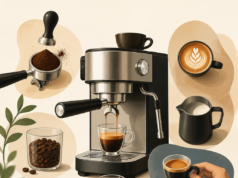
You do not need elaborate bar equipment to make Bicerin at home, but a few well-chosen tools make the process smoother and help preserve its signature layers. Start with an espresso maker, moka pot or coffee machine capable of producing a small amount of strong, hot coffee. Espresso is the classic choice, although concentrated brewed coffee works well too.
A small saucepan is useful for gently melting and warming the chocolate mixture. Choose one with a heavy base if possible, as it helps prevent the chocolate from catching on the bottom. Keep a whisk nearby to blend the chocolate and any milk or cream smoothly, leaving no lumps behind.
For measuring and pouring, a heatproof measuring cup with a spout is particularly helpful. It gives you more control when adding the coffee over the chocolate layer. Clear, heatproof glasses are equally important. Bicerin is traditionally served in a small glass, and seeing the dark chocolate, coffee and pale cream makes the drink feel as elegant as it tastes.
To prepare the cream, use a milk frother, hand mixer or ordinary whisk. The aim is softly whipped cream, thick enough to rest on the surface but still loose and pourable. A hand mixer is quick, while a whisk offers more control and makes it easier to stop before the cream becomes stiff.
A few optional tools suit cooks who enjoy precision:
- A small spoon, ideally with a rounded back, helps you pour coffee gently and maintain cleaner layers.
- A kitchen scale lets you portion chocolate, coffee and cream consistently.
- A thermometer can help keep the chocolate hot but not scorching, and ensure the coffee is warm enough for a cohesive drink.
With these simple tools for preparing Bicerin, the focus stays where it belongs: on careful layering and a slow, comforting sip.
How to Prepare Bicerin at Home
How to Prepare Bicerin at Home
Making Bicerin is less about complicated technique and more about timing, temperature and a gentle hand. Prepare the components separately, then assemble them just before serving so the layers remain clear and inviting.
Start with the chocolate layer. Melt finely chopped dark chocolate in a small saucepan over low heat with a little hot milk or water, whisking until smooth, glossy and thick enough to coat a spoon. Keep it hot, but do not let it boil or scorch.
Next, brew a fresh espresso or a small amount of strong coffee. Espresso gives the drink its classic intensity, though strong moka pot coffee also works well. The coffee should be hot, but ideally close in temperature to the chocolate, which helps the layers settle neatly rather than mixing at once.
Lightly whip cold heavy cream until it thickens slightly and forms soft peaks. It should still be pourable, not stiff like a dessert topping. If you like, warm a small clear heatproof glass with hot water, then dry it thoroughly before assembling the drink.
To build your Bicerin, pour the hot chocolate into the bottom of the glass, filling roughly one-third of it. Slowly add the coffee, aiming for another third. For the cleanest separation, pour the coffee over the back of a small spoon held just above the chocolate layer. Finish by gently spooning or pouring the softly whipped cream over the top.
Serve immediately with a small spoon, although traditional Bicerin is usually not stirred. Instead, sip slowly through the layers. The first taste is cool and creamy, followed by deep chocolate, then the warm, coffee-forward finish beneath.
Benefits of Bicerin, Plus Sensible Serving Tips
Benefits of Bicerin, Plus Sensible Serving Tips
Bicerin is first and foremost a pleasure: a compact, warming drink that combines the lift of coffee with the comforting richness of chocolate and cream. Its small size is part of its appeal. Rather than being an everyday oversized coffee, it feels like a deliberate pause, suitable for a quiet afternoon or as a modest after-dinner treat.
Coffee contributes caffeine, which may support alertness and focus for many people. Dark chocolate brings an intense cocoa flavor as well as naturally occurring cocoa compounds, including flavanols. These compounds are often discussed as part of a balanced diet, but Bicerin is still an indulgent drink, thanks to its chocolate and cream. Enjoying it in a traditional small glass is a simple way to keep the experience satisfying without turning it into an overly heavy serving.
There are easy ways to adapt the recipe to personal preferences. Choose dark chocolate with little or no added sugar if you prefer a less-sweet Bicerin, or use a smaller glass for a lighter portion. Decaffeinated espresso preserves the coffee flavor for anyone limiting caffeine, especially later in the day. Plant-based whipping creams can also replace dairy cream, although they create a different texture and are a modern variation rather than the classic Turin preparation.
Classic Bicerin contains both caffeine and dairy, and its chocolate may contain milk depending on the type used. Those sensitive to caffeine, lactose, or dairy can adjust the coffee and cream accordingly. For the fullest enjoyment, serve it hot, sip it unhurriedly, and let the changing layers make a small portion feel like a complete café ritual.
Bring a Taste of Turin to Your Table
Bring a Taste of Turin to Your Table
Bicerin endures because it turns three familiar ingredients into something that feels special. Strong coffee brings depth, chocolate adds warmth and richness, and softly whipped cream gives every sip a smooth finish. Served in a small clear glass, the distinct layers make the drink as attractive to look at as it is satisfying to taste.
It is also a small connection to Turin’s celebrated café culture, where taking time over a drink is part of the pleasure. You do not need a grand occasion to make one at home. Prepare Bicerin for a slow weekend breakfast, when a sweet, warming coffee feels especially welcome. Serve it after dinner in place of a larger dessert, or make it during a quiet afternoon when you want a cozy pause from the day.
Once you are comfortable with the classic version, experiment thoughtfully. Try a darker chocolate for a more intense cocoa note, adjust the sweetness to your taste, or test different coffees to find a pairing you enjoy. Keep the basic balance in mind, though: Bicerin is at its best when coffee, chocolate and cream each have room to be noticed.
The real charm lies in its unhurried ritual. Make a small glass, keep the layers clear where possible, and resist stirring them together straight away. Sip slowly, layer by layer, and let a simple Turin classic turn an ordinary moment into a café-worthy treat.