
Welcome to the World of Espresso
Welcome to the World of Espresso
One small cup, one rich aroma, one sip that can wake up your taste buds: that is the appeal of espresso. Though it is usually served in just a few ounces or less, espresso delivers a concentrated coffee experience with deep flavor, a full texture, and a satisfying burst of energy.
Espresso has long been part of café culture around the world. In an Italian bar, it may be enjoyed quickly while standing at the counter. At home, making a morning shot can become a calming ritual, from measuring the beans to hearing the machine begin to pour. There is something inviting about slowing down for a drink that is small enough to savor but bold enough to leave an impression.
You can certainly enjoy espresso on its own. A well-made shot may taste chocolatey and nutty, bright and fruity, or pleasantly bittersweet, depending on the beans and brewing method. Yet espresso is also the starting point for many familiar coffeehouse favorites. Add steamed milk and foam for a cappuccino, combine it with silky milk for a latte or flat white, or dilute it with hot water for an americano. It also works beautifully in iced drinks when you want a stronger coffee flavor.
This guide makes espresso approachable, whether you are curious about your first home-brewed shot or hoping to improve your daily routine. You will learn what makes espresso different from regular coffee, how to choose beans, and which Espresso preparation tools are worth having. We will also cover How to prepare espresso step by step, solve common brewing problems, and explore the Benefits of Espresso beyond its caffeine boost.
There is no need to chase perfection from the beginning. Start with curiosity, taste as you go, and let each shot teach you what you enjoy most.
What Makes Espresso Different from Regular Coffee?
What Makes Espresso Different from Regular Coffee?
Espresso is coffee brewed in a very specific way: hot water is pushed through a compact bed of finely ground coffee under pressure. This process happens quickly, usually in well under a minute, and creates a small but intensely flavored drink. A typical double espresso may be only a few sips, yet it carries a full aroma, rich texture, and concentrated coffee taste.
Drip coffee uses a different approach. Water flows slowly through medium-ground coffee by gravity, often taking several minutes to fill a larger cup or mug. Because the grounds are coarser and the brewing process is gentler, drip coffee tends to taste lighter in body and less concentrated per sip. Espresso, by contrast, is thicker, fuller-bodied, and often feels more intense on the palate.
Here is a simple comparison:
- Grind size: Espresso needs a fine grind, while drip coffee generally uses a medium grind.
- Brewing time: Espresso is commonly brewed in about 25 to 30 seconds. Drip coffee takes several minutes.
- Concentration: Espresso delivers a strong flavor in a small volume. Drip coffee is more diluted and served in larger portions.
- Body: Espresso has a syrupy, velvety texture, while drip coffee is usually cleaner and lighter.
- Serving size: A single espresso is often around 1 ounce, while a regular coffee can be 8 ounces or more.
A fresh espresso shot is usually topped with crema, the golden-brown layer of foam that forms during brewing. Crema develops when pressure helps release coffee oils and carbon dioxide from fresh grounds. It is often a welcome sign that the coffee was fresh and the extraction was on track, though crema alone does not guarantee a great-tasting shot.
Finally, espresso is not a bean type or a roast level. You can make it with many different coffee beans, from traditional darker roasts to lighter, fruitier options. What makes it espresso is the brewing method and the concentrated drink it produces.
Choosing Beans for a Great Espresso
Choosing Beans for a Great Espresso
Since espresso can be made from many kinds of coffee, choosing beans is where you can start shaping the flavor in your cup. Fresh, high-quality whole beans are the best foundation. Grinding just before brewing helps preserve the aromatic oils and gases that give an espresso its sweetness, body, and lively crema.
When shopping, look for a roast date rather than only a best-by date. Coffee is usually at its most enjoyable after it has rested for several days from roasting and within a few weeks afterward. Store beans in an airtight container at room temperature, away from heat, light, and moisture. Buy smaller amounts more often if possible, since even excellent beans lose their character over time.
Roast level makes a noticeable difference. Traditional espresso blends are often medium-dark or dark roasted, producing familiar flavors such as chocolate, toasted nuts, caramel, and a fuller, richer body. These coffees tend to work especially well if you enjoy cappuccinos or lattes, because their deeper flavor remains present alongside milk.
Lighter roasts can make excellent espresso too. They may taste brighter and more complex, with notes of berries, citrus, stone fruit, flowers, or tea. They can be a little less forgiving to brew, but they offer an exciting option for anyone who wants to explore a more modern coffee style.
There is no single “correct” espresso bean. If you prefer a classic, comforting shot, try coffees described as chocolatey, nutty, or caramel-like. If you enjoy fresh, vivid flavors, seek out beans with floral or citrus-forward tasting notes. Start with a bag that sounds appealing, then let your own taste guide the next one you try.
Espresso Preparation Tools for Home Brewing
Espresso Preparation Tools for Home Brewing
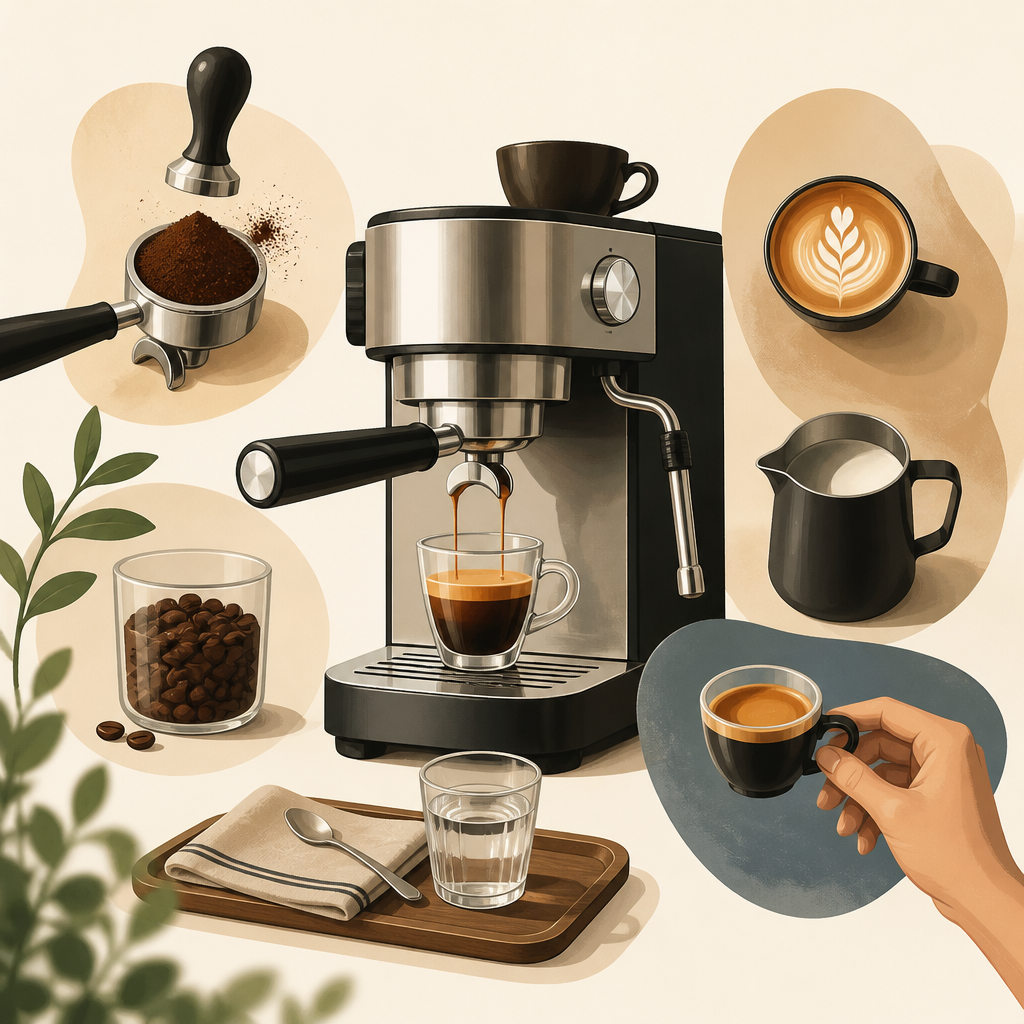
A satisfying home setup does not need to look like a professional café, but a few reliable Espresso preparation tools make the process much easier. The essentials are an espresso machine, a burr grinder, a portafilter, a tamper, a scale, and a small cup or shot glass.
The machine supplies the hot water and pressure needed to brew a shot. Its portafilter is the handled basket that holds the ground coffee, while a tamper compresses those grounds into an even coffee bed. A digital scale helps you measure both the coffee dose and the finished espresso, which makes it far simpler to repeat a result you enjoy. A warmed demitasse cup or small shot glass is ideal for catching and serving the espresso.
Of these tools, a burr grinder is one of the most important. Unlike a blade grinder, which chops beans into uneven pieces, a burr grinder produces more consistent fine particles. This helps water move through the coffee evenly, leading to a more balanced shot with fewer sour or bitter surprises.
A few extras can make daily brewing smoother. A distribution tool helps level the grounds before tamping, reducing uneven spots. A knock box gives you a tidy place to discard used coffee pucks. If you enjoy milk drinks, add a milk pitcher and a thermometer for steaming. A small cleaning brush keeps the grinder and machine tidy, while filtered water can improve flavor and reduce mineral buildup.
Beginners have options beyond a large, expensive machine. Manual espresso makers are compact and hands-on, pod machines offer speed and convenience, and smaller entry-level machines can fit limited counters and budgets. Start with what suits your routine, then upgrade only when you know what features matter most to you.
How to Prepare Espresso Step by Step
How to Prepare Espresso Step by Step
Learning How to prepare espresso is easier when you follow the same simple routine each time. Consistency gives you a dependable starting point, then you can make small adjustments to suit your taste.
First, switch on the espresso machine and allow it to fully warm up. Place your cup on the machine’s cup warmer, if it has one, or rinse it with hot water. A warm cup helps keep a small shot from cooling too quickly.
Grind fresh coffee beans to a fine, espresso-style texture. Use a scale to measure a consistent dose into the portafilter basket. A practical starting point is 18 grams of ground coffee for a double shot. Gently distribute the grounds so they are level across the basket, breaking up any obvious clumps. This helps water flow evenly through the coffee.
Set the portafilter on a stable surface and tamp the coffee with firm, controlled pressure. The goal is not to press as hard as possible, but to create a flat, even coffee bed. Wipe loose grounds from the rim of the portafilter, then lock it into the machine.
Start the shot right away. At first, you may see a few dark drops. These should gradually become a smooth, honey-like stream. Aim to produce about 36 grams of espresso from your 18-gram dose in roughly 25 to 30 seconds.
Taste the result before changing anything. If it tastes sour or thin, try a slightly finer grind or a longer yield. If it tastes bitter or dry, try a coarser grind, a shorter yield, or a quicker shot. Change only one variable at a time, whether it is grind size, dose, yield, or brewing time. Small, patient adjustments are the key to finding an espresso you truly enjoy.
Troubleshooting Common Espresso Problems
Troubleshooting Common Espresso Problems
Even with a reliable recipe, espresso can take a few tries to dial in. The flavor in your cup offers useful clues about what to adjust next.
If your espresso tastes sharply sour, thin, or a little like citrus peel, it may be under-extracted. This means the water has not pulled enough flavor from the grounds. A grind that is too coarse is a common cause, as is water that is not hot enough or a shot that runs faster than expected. Try grinding a little finer first, then pull another shot while keeping the dose and yield the same.
An espresso that tastes intensely bitter, dry, or harsh may be over-extracted. In this case, the water has taken too much from the coffee. The grind may be overly fine, the shot may be running too long, or too much water may be passing through the puck. Try a slightly coarser grind, a shorter yield, or stop the shot sooner.
Channeling is another common issue. It happens when water finds weak paths through the coffee bed instead of flowing evenly through all the grounds. You may notice a shot that spurts, flows unevenly, or tastes both sour and bitter. Distribute the grounds carefully before tamping, break up clumps if needed, and tamp level with steady pressure.
Weak crema or a watery shot can have several causes. Beans that are stale often produce little crema, while an incorrect dose, uneven grind, or machine that has not fully heated can make the espresso feel thin. Use fresh beans, weigh your dose, and allow the machine enough time to warm up.
Most importantly, be patient. Dialing in espresso is an iterative process, not a one-time setup. Make one small change, taste again, and let each shot teach you something.
Benefits of Espresso Beyond the Caffeine Boost
Benefits of Espresso Beyond the Caffeine Boost
The Benefits of Espresso go well beyond its ability to provide a quick lift. A well-made shot delivers bold aroma, rich body, and layered flavor in a small serving. For people who enjoy coffee but do not always want a large mug, espresso offers a focused, satisfying experience that can be enjoyed in just a few quiet minutes.
It is also remarkably versatile. Drink it straight to notice its full character, add hot water for an americano, or combine it with steamed milk for cappuccinos, lattes, and flat whites. Espresso also works beautifully over ice, whether mixed with cold water, milk, or a little flavored syrup for a refreshing warm-weather drink.
Coffee naturally contains antioxidants, compounds that are also found in many plant-based foods. However, everyone responds to caffeine differently. The amount that feels enjoyable and comfortable can depend on factors such as personal sensitivity, the time of day, medications, and individual health needs. If you have concerns about caffeine or a medical condition, it is sensible to seek guidance from a qualified healthcare professional.
There are sensory and social rewards, too. Pulling a shot can become a calming morning ritual, from the sound of the grinder to the first sip of a warm cup. At home, an espresso machine also makes it easy to offer café-style drinks to friends and family.
Enjoy espresso in moderation, especially if caffeine makes you feel jittery or disrupts your sleep. The best part is not simply the energy boost, but the chance to pause and enjoy a small coffee made exactly the way you like it.
Enjoying Your Espresso Journey
Enjoying Your Espresso Journey
Great espresso is built on a few dependable basics: fresh beans, reliable equipment, careful technique, and a willingness to trust your own taste. You do not need to chase perfection from the first shot. Even experienced home baristas make small adjustments as beans change, weather shifts, or a new coffee brings out different flavors.
Start with a simple, repeatable recipe, such as 18 grams of coffee producing 36 grams of espresso in about 25 to 30 seconds. From there, pay attention to what you taste. If the shot is sharp and sour, try a slightly finer grind. If it tastes harsh or dry, try grinding a little coarser or stopping the shot sooner. Change just one variable at a time, then write down the result. A few notes on dose, shot time, yield, and flavor can make the learning process much less mysterious.
Once you have a shot you enjoy, explore the many ways espresso can be served. Sip it straight to notice its aroma, sweetness, and texture. Add hot water for an americano when you want a longer, lighter drink. Or steam milk for a comforting latte, cappuccino, or flat white. Iced espresso drinks are another easy way to enjoy your favorite beans on warmer days.
Most importantly, let your preferences guide you. Some people love a traditional dark, chocolatey espresso, while others prefer a bright, fruity shot with milk or water. The best espresso is not the most complicated or technical one. It is the one that tastes satisfying to you, made with growing confidence and enjoyed one shot at a time.