

1. What Is Café Crème?
What Is Café Crème?
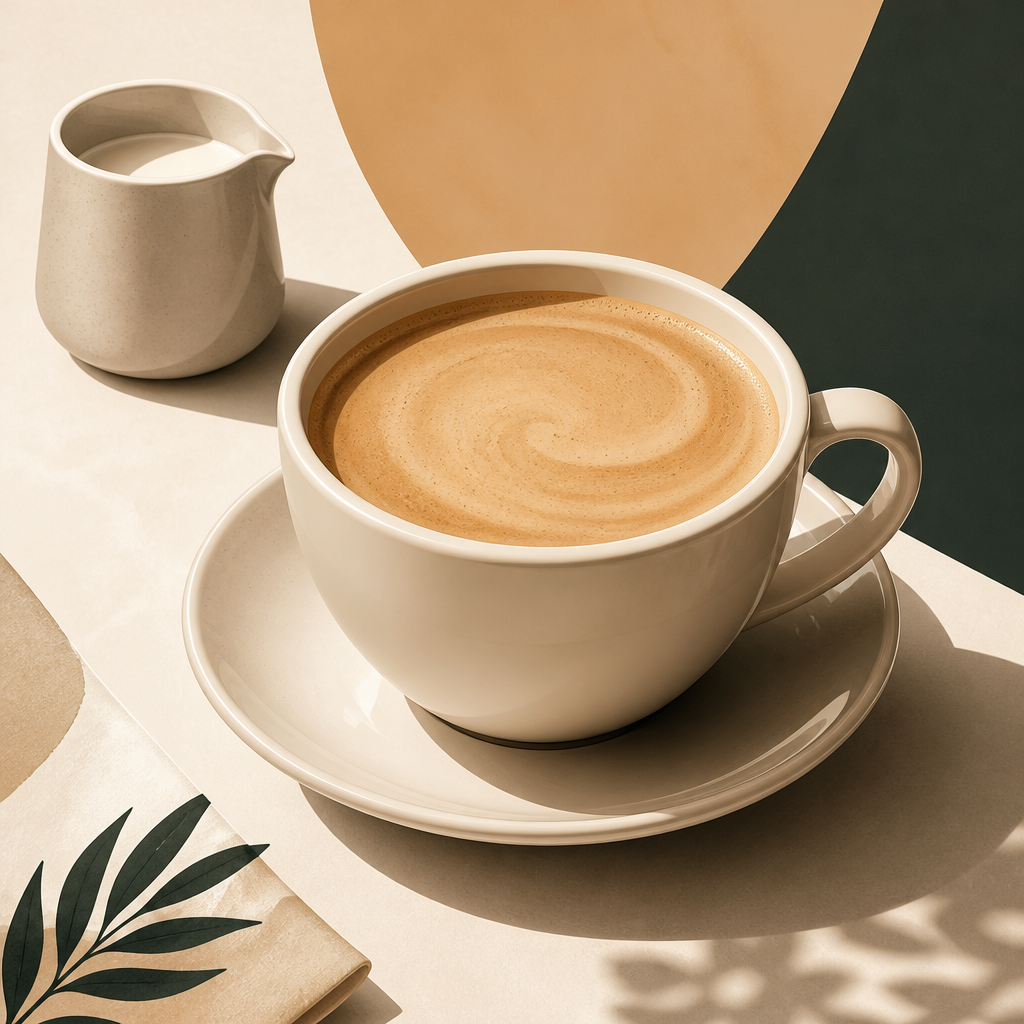
If you enjoy the rich aroma of espresso but want a more generous cup to linger over, Café Crème may be your ideal coffee. It is a long, espresso-based drink brewed directly through finely ground coffee, producing a larger serving than a standard espresso and a delicate layer of light golden crema on top.
Café Crème is particularly associated with Switzerland, France, and other parts of continental Europe, where it has long been a familiar everyday café order. Depending on the country, café, and machine, it may arrive in a small cup or a larger breakfast-style cup. The details vary, but the central idea stays the same: espresso-style coffee with more volume, brewed to retain much of espresso’s fragrance and character.
Despite its name, Café Crème is not coffee mixed with dairy cream. No milk or cream is required. The “crème” refers instead to the crema, the naturally occurring, tawny foam that forms when pressurized water passes through fresh coffee grounds. This crema carries aromatic oils and gases released during brewing, giving the drink its inviting appearance and part of its distinctive aroma.
Think of it as a middle ground between a short espresso and a regular cup of filter coffee. It is made on an espresso machine, not simply by adding water afterward, and that direct, longer extraction gives it a character of its own. Café Crème offers a satisfying choice for anyone who wants a smooth coffee with a little more time, volume, and comfort in every cup.
2. A Short History of This European Coffee Classic
A Short History of This European Coffee Classic
Café Crème grew alongside the spread of espresso culture in Europe during the 20th century. As commercial espresso machines became more reliable and widely available, cafés could prepare coffee quickly while still offering a drink with a fresh aroma, a warm body, and the signature golden crema created under pressure.
In Switzerland, France, and neighboring parts of continental Europe, many customers wanted something larger and gentler than a small espresso. Café Crème met that need well. It retained the character of machine-brewed coffee, but arrived in a more leisurely, cup-sized serving that suited breakfast, a mid-morning pause, or an unhurried café conversation.
Its popularity also reflects the practical side of café life. For baristas, an espresso machine made it possible to prepare consistent drinks to order. For regular customers, Café Crème offered a familiar everyday choice: more substantial than an espresso, yet generally more direct and concentrated in flavor than a pot of filtered coffee.
The name and style are not perfectly fixed across Europe, however. In one café, a Café Crème may mean a long extraction served in a large cup. Elsewhere, it may be close to a lungo, while some places use the term for a coffee topped with milk foam or cream. Portions, coffee-to-water ratios, and roast preferences can vary from region to region.
That flexibility is part of the drink’s story. Café Crème has remained a European café classic not because every cup follows one strict formula, but because it consistently answers the same appeal: a smooth, satisfying coffee made for lingering over.
3. Café Crème Taste: What to Expect in the Cup
3. Café Crème Taste: What to Expect in the Cup
Café Crème taste is often described as smooth, rounded, and pleasantly aromatic. It has more presence than a small espresso because there is simply more coffee in the cup, yet it is usually less concentrated and forceful. Rather than delivering espresso’s quick, intense hit, Café Crème offers a gentler experience that can be enjoyed over several unhurried sips.
Its character comes largely from the longer espresso-style extraction. More water passes through the coffee puck than it would for a standard espresso, drawing out additional soluble flavors and creating a fuller serving. The result is a cup with a lighter body than espresso, but more texture and coffee flavor than a cup made by simply adding hot water to espresso. A thin, golden crema on top can add a faintly velvety feel and a fragrant first impression.
The exact flavor depends on the beans, roast, and brewing settings. Medium or medium-dark roasted coffees often produce familiar notes of toasted nuts, cocoa, caramel, and dark chocolate. These profiles suit Café Crème especially well, giving the longer drink a comforting sweetness and a mild roast character without becoming too heavy.
Lighter roasts can bring out brighter flavors, such as citrus, red fruit, stone fruit, or floral notes. In a longer extraction, these characteristics may feel lively and refreshing, though they can become sharp if the coffee is under-extracted. Darker roasts, meanwhile, tend to offer deeper bitterness, toasted flavors, and a more robust finish.
A well-made Café Crème should not taste thin, sour, or aggressively bitter. Ideally, it balances aroma, sweetness, gentle acidity, and a clean finish. It is an inviting middle ground for anyone who enjoys espresso flavor but prefers a larger, softer cup.
4. Café Crème Compared With Espresso, Americano, and Lungo
4. Café Crème Compared With Espresso, Americano, and Lungo
Café Crème starts with the same basic idea as espresso, but it takes the drink in a gentler, longer direction. A standard espresso is a short, concentrated shot, often around 25 to 40 ml, brewed quickly under pressure. Café Crème uses a longer extraction and produces a larger cup, commonly about 100 to 180 ml. It is less concentrated than espresso, with a lighter body and softer intensity, yet it still carries the fragrant oils and espresso-style character that make it distinct.
Crema is another useful point of comparison. Espresso usually has a dense, compact layer of crema because of its short extraction and concentrated volume. Café Crème has a lighter golden crema that may be thinner and more delicate, but it still adds aroma and a pleasing texture to the first sip. The longer brewing time can draw out more flavor from the grounds, so careful dialing-in matters to avoid bitterness.
An Americano may look similar in the cup, but it is made differently. It begins with one or more espresso shots, then hot water is added afterward. Café Crème, by contrast, runs more water through the coffee grounds during extraction. This gives it a different texture and flavor profile: an Americano can taste cleaner and more diluted, while Café Crème often feels more integrated and aromatic.
Café Crème is also closely related to lungo. Both are longer espresso-style drinks brewed by extending the extraction. In some cafés and regions, the names are used almost interchangeably. Elsewhere, a lungo is shorter and more concentrated than a Café Crème. Rather than focusing too strictly on the label, think of Café Crème as the larger, smoother end of the long-espresso spectrum.
5. Choosing Beans and Setting Up Your Coffee
5. Choosing Beans and Setting Up Your Coffee
A good Café Crème begins with fresh, whole coffee beans. Whole beans hold on to their aromatic oils and flavors far better than pre-ground coffee, which starts to lose freshness quickly once exposed to air. For the most fragrant, balanced cup, buy beans in modest amounts and grind only what you need immediately before brewing.
Medium and medium-dark roasts are an approachable place to start. They usually bring out notes of chocolate, toasted nuts, caramel, and gentle fruit while retaining enough sweetness to suit a longer espresso-style extraction. Very dark roasts can work too, especially if you enjoy a deeper, more traditional bitter edge, but they may become harsh when brewed into a larger cup. Lighter roasts can produce a lively, fruitier Café Crème, although they often need especially careful dialing-in. Personal preference matters most, so use the roast and bean style you genuinely enjoy drinking.
Water deserves just as much attention as the beans. Clean, fresh water with a balanced mineral content helps coffee taste clear and sweet. Water that is heavily chlorinated, very hard, or overly softened can dull flavor and affect machine performance over time. Filtered water is often a helpful choice.
For consistent results, keep your coffee dose, grind size, and machine temperature as steady as possible. Use a scale to measure the same dose each time, then adjust one variable at a time when refining the recipe. A grind that is too coarse can lead to a thin, sour-tasting cup, while an overly fine grind may make the coffee slow, harsh, and bitter. Stable brewing temperature also supports even extraction, helping the Café Crème taste smooth, rounded, and aromatic rather than uneven or dull.
6. Tools for Preparing Café Crème
Tools for Preparing Café Crème
The traditional tools for preparing Café Crème are much the same as those used for espresso, with a few details that matter when making a longer cup. At minimum, you will need:
- An espresso machine
- A burr grinder
- A portafilter and basket
- A tamper
- A digital scale
- A warmed cup, ideally holding about 150 to 200 ml
An espresso machine is the key piece of equipment. Look for one that can maintain steady brewing pressure and a consistent water temperature. These controls help extract the coffee evenly during the longer pull needed for Café Crème. When pressure or temperature fluctuates, the cup can become sharp, weak, or unpleasantly bitter, and the golden crema may disappear quickly.
A burr grinder is nearly as important as the machine. Unlike a blade grinder, it produces more uniform particles, which makes it easier to control extraction. Use the portafilter to hold the measured grounds, distribute them evenly, and tamp with firm, level pressure. A scale helps you repeat a recipe accurately and see how small changes in dose or yield affect the final cup.
No home espresso setup? You can still make a coffee with a similar full, smooth character. An AeroPress, moka pot, or pour-over brewer can produce a longer black coffee that is enjoyable with the same kinds of beans. A moka pot is the closest in intensity, while an AeroPress offers flexibility and a softer texture.
Still, these methods do not create a traditional Café Crème. They lack the pump-driven pressure that produces its distinctive crema and espresso-like concentration. For the classic version, a capable espresso machine, fresh beans, and a consistent grinder remain the best combination.
7. Preparation Method for Café Crème
7. Preparation Method for Café Crème
The preparation method for Café Crème begins much like espresso, but the shot runs longer to create a larger, smoother drink. Start with freshly roasted whole beans, ground just before brewing. A double basket dose of around 18 grams is a useful starting point, although your machine and basket size may call for a little more or less.
Add the grounds to the portafilter, distribute them evenly, and tamp with steady, level pressure. An even coffee bed helps water flow through the puck consistently, avoiding weak spots that can lead to uneven extraction.
Lock the portafilter into the machine and pull a longer espresso-style shot. Aim for a brew ratio of roughly 1 part ground coffee to 3 to 5 parts brewed coffee. For example, 18 grams of coffee might yield 55 to 90 grams of Café Crème. Start near the lower end if you prefer a richer cup, then extend the yield for a lighter, more leisurely coffee.
Taste is the best guide. If the coffee tastes sharp, thin, or noticeably sour, it is probably under-extracted. Try grinding a little finer, increasing the brew time, or using a slightly higher yield. If it tastes harsh, dry, or overly bitter, the coffee may be over-extracted. Grind a touch coarser, stop the shot sooner, or reduce the final yield.
A good Café Crème should flow steadily, with a warm golden crema forming on top. Serve it immediately in a preheated cup. The crema, aroma, and smooth character are at their best in the first few minutes, before the coffee cools and settles.
8. Make Café Crème Your Everyday Coffee
Make Café Crème Your Everyday Coffee
Café Crème is a satisfying middle ground for anyone who finds espresso too brief but does not want the diluted character of a larger black coffee. It offers more to sip, while still carrying the aroma, crema, and concentrated flavor that make espresso special. The result can feel both practical and a little indulgent, whether you drink it as a morning coffee or a relaxed afternoon break.
Its flexibility is part of the appeal. Start with a medium or medium-dark roast if you enjoy a familiar, rounded cup with notes of chocolate, nuts, or caramel. Try a lighter roast when you want brighter fruit notes and more acidity. Small changes can make a noticeable difference, so it is worth adjusting one variable at a time.
Experiment with your recipe until it suits you. A shorter yield will produce a fuller, more espresso-like drink, while a longer yield creates a gentler cup with more volume. You can also test different doses, grind settings, and cup sizes. A smaller cup helps preserve heat and emphasizes intensity, while a larger cup makes the drink feel more leisurely.
There is no single perfect version. Regional traditions vary, machines behave differently, and every coffee drinker has their own idea of balance. Some prefer a bold, slightly bitter Café Crème, while others want a sweeter, smoother result with a softer finish.
The clear takeaway is simple: the best Café Crème is the one that gives you the right balance of volume, flavor, and comfort for your daily routine.