

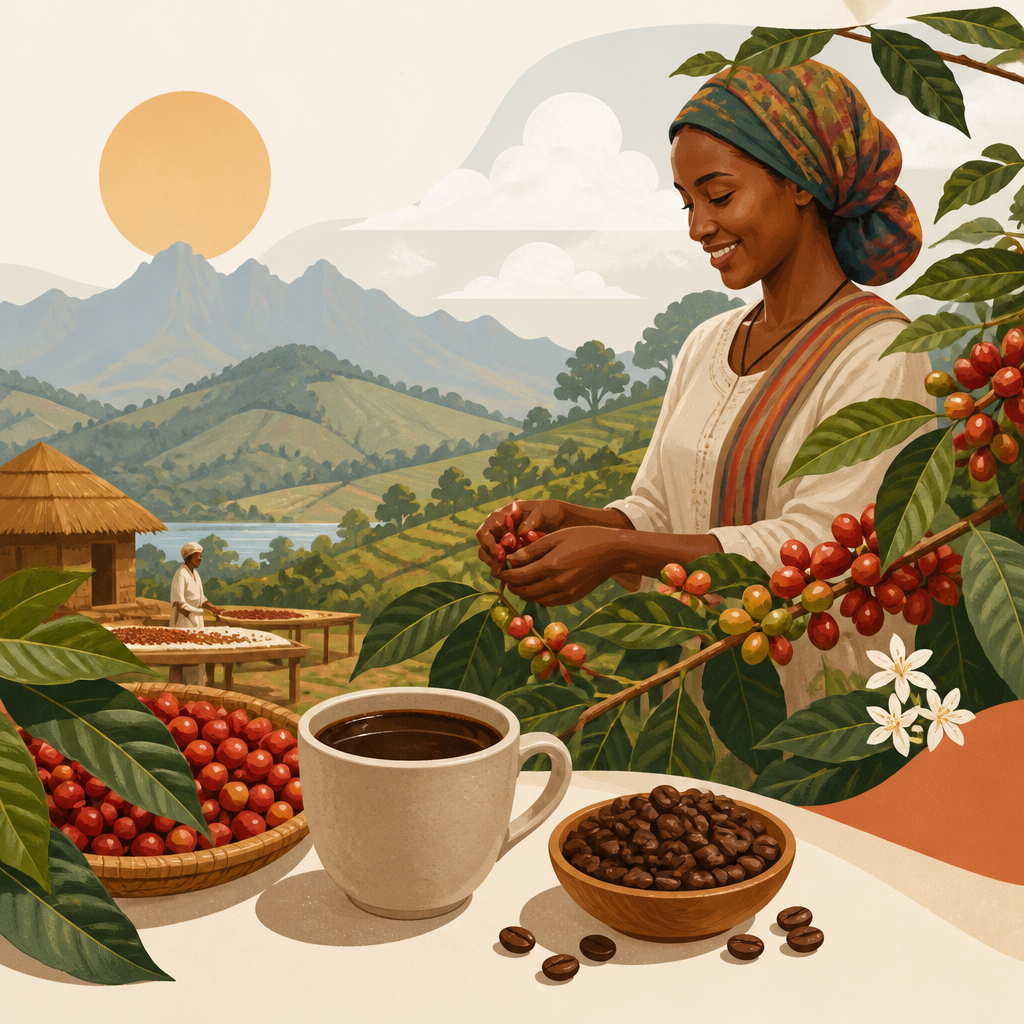
Welcome to the World of Sidamo Coffee
Welcome to the World of Sidamo Coffee
Take a sip of a well-brewed Sidamo coffee and you may notice something unexpectedly vivid: a jasmine-like aroma, a bright citrus sparkle, or the juicy sweetness of berries and ripe stone fruit. These expressive flavours have helped make Sidamo one of Ethiopia’s best-known coffee-growing regions and a favourite among coffee drinkers around the world.
Often spelled Sidama, this southern Ethiopian coffee region produces Arabica beans with a character that feels both delicate and lively. Sidamo coffee is widely celebrated for its crisp, pleasant acidity, floral perfume and fruit-forward profile. In coffee, acidity does not necessarily mean sourness. At its best, it brings a refreshing quality, much like the brightness of a ripe orange, peach or berry. The result can be a cup that feels clean, fragrant and full of personality.
Of course, no two bags of Sidamo taste exactly alike. Growing location, weather, farming practices, processing method and roast level all influence what reaches your cup. Some Sidamo coffees are light and tea-like, with lemon and white-flower notes. Others are richer and sweeter, offering blueberry, honey or chocolate-like flavours.
This guide will help you get to know the beans behind those memorable cups. We will explore Sidamo’s origins and coffee heritage, the flavours to look for, and the Cultivation of Sidamo coffee beans from tree to export. You will also learn how processing and roasting shape the final taste, plus How to prepare Sidamo coffee beans for a satisfying brew at home.
Finally, we will take a balanced look at the Benefits of Sidamo coffee beans, including practical health considerations, and share a few useful tips for choosing a fresh, well-sourced bag. Whether you are new to Ethiopian coffee or already a devoted fan, Sidamo offers plenty to discover.
Where Sidamo Coffee Comes From

Where Sidamo Coffee Comes From
Sidamo coffee comes from southern Ethiopia, in and around the Sidama region, an area also commonly spelled Sidamo in the coffee trade. While the names can refer to slightly different administrative or geographical contexts, both are widely used to describe coffees grown in this celebrated part of the country.
The landscape plays a major role in what makes these beans special. Coffee often grows at high elevations, commonly between about 1,500 and 2,200 metres above sea level. At these heights, warm days are balanced by cooler nights. This slower growing cycle gives coffee cherries more time to mature, developing the sugars and complex compounds that later contribute to a bright, layered cup.
Sidamo’s fertile soils, reliable seasonal rainfall and lush growing environment also support healthy coffee trees. Many plots sit among shade trees and other vegetation, creating a diverse setting rather than a single-crop landscape. Conditions naturally vary from village to village, which is one reason two Sidamo coffees can taste noticeably different while still sharing a lively, fruit-forward character.
This region belongs to a coffee tradition that runs especially deep. Ethiopia is widely regarded as the birthplace of Coffea arabica, the species behind most of the world’s specialty coffee. Coffee is not simply an export crop here, it is woven into daily life, local livelihoods and longstanding social rituals.
When you drink a cup of Sidamo, you are tasting more than altitude and soil. You are also tasting generations of growing knowledge from one of coffee’s most important homelands.
What Does Sidamo Coffee Taste Like?
What Does Sidamo Coffee Taste Like?
Sidamo coffee is often loved for its bright, expressive flavour. Many cups open with citrus-like notes, such as lemon, orange or bergamot, followed by ripe berries, peach, apricot or other stone fruit. Depending on the farm, season and processing method, you may also notice delicate jasmine florals, black-tea-like nuances, honeyed sweetness or a gentle chocolate finish.
No two lots taste exactly alike. A coffee from one village may feel light, sparkling and tea-like, while another has a rounder texture and a deeper fruit sweetness. Roast level, brewing method and freshness also shape what you taste in the cup.
Washed Sidamo coffees are especially known for clarity. In this process, the fruit is removed from the coffee seeds before drying, which often creates a clean, crisp cup. These coffees can taste floral and elegant, with lively citrus notes and a refined tea-like body.
Natural-processed Sidamo, where the cherries dry with their fruit still around the seeds, often tastes sweeter and more intensely fruity. Expect berry jam, tropical fruit, candy-like sweetness and a fuller, creamier body. Natural coffees can be wonderfully bold, though their flavours may be less delicate than those of washed lots.
You may also hear Sidamo described as having high acidity. In coffee, acidity does not necessarily mean sourness or something unpleasant. At its best, it is a refreshing crispness or juicy quality, much like the brightness of a ripe orange, berry or apple. It helps the flavours feel lively and prevents the cup from tasting flat.
For many coffee drinkers, that balance of floral aroma, fruit sweetness and sparkling acidity is what makes Sidamo so memorable.
Cultivation of Sidamo Coffee Beans

Cultivation of Sidamo Coffee Beans
The Cultivation of Sidamo coffee beans begins in the elevated landscapes of southern Ethiopia, where many coffee trees grow at roughly 1,500 to 2,200 metres above sea level. At these heights, warm days and cool nights slow the ripening of the coffee cherries. This longer growing period gives the sugars and flavour compounds inside the beans more time to develop.
Rainfall, fertile soils and natural shade also play an important part. Coffee trees are often grown beneath taller trees, which can protect them from intense sun and help create a more stable environment. The region’s nutrient-rich soils support healthy plants, while seasonal rains provide the water needed for cherries to mature.
Many Sidamo farms are smallholder operations rather than large estates. Families may cultivate coffee alongside food crops, tending their trees throughout the year and watching closely for cherries that have reached the right deep-red ripeness. Harvesting is commonly done by hand, allowing pickers to select ripe cherries rather than stripping every fruit from a branch at once.
After harvest, the cherries are sorted to remove damaged or unripe fruit. They may then follow one of two main paths. For washed coffee, the fruit is removed and the beans are washed before drying. For natural coffee, whole cherries are dried in the sun, allowing the fruit’s sweetness to influence the bean. Once dry, the beans rest, are hulled and carefully graded before export as green coffee.
Each step matters. Thoughtful farming and precise processing can bring out Sidamo’s floral clarity, juicy fruit notes or honey-like sweetness. They also help create better traceability, connecting a particular coffee to its community, harvest and processing style.
How Sidamo Coffee Is Processed and Roasted
How Sidamo Coffee Is Processed and Roasted
Processing begins after the coffee cherries are picked, and it has a major effect on what you taste in the cup. A washed Sidamo coffee has the fruit pulp removed soon after harvest. The beans are then fermented, washed clean and dried. This method often produces a crisp, clear cup, with bright citrus-like acidity, floral aromas and tea-like delicacy.
Natural processing takes a different path. Whole cherries are dried with the fruit still surrounding the beans, usually on raised beds with regular turning to promote even drying. As the cherries dry, some of the fruit’s character transfers to the bean. Natural Sidamo coffees are often sweeter, fuller-bodied and more intensely fruity, with notes that can suggest berries, tropical fruit or jam.
Honey-style processing sits somewhere between these two approaches. The skin is removed, but some sticky fruit pulp, sometimes called mucilage, remains on the bean during drying. Depending on how much pulp is left, the result may combine the cleaner profile of a washed coffee with extra sweetness and rounded fruit character. Honey processing is less common in Ethiopia than washed or natural methods, but it offers an interesting alternative when available.
Roasting is equally important. Light to medium roasts are popular choices for Sidamo because they protect the qualities that make it distinctive: jasmine-like florals, lively citrus, soft honey sweetness and fresh fruit notes. A very dark roast can cover these subtler details with stronger roast flavours.
That does not make dark roasting wrong. If you enjoy deeper caramelized sugars, heavier body and chocolatey richness, a darker-roasted Sidamo may suit you well. Just expect the coffee’s specific regional character to be quieter, with fewer of the delicate floral and fruit-forward notes that shine in lighter roasts.
How to Prepare Sidamo Coffee Beans

How to Prepare Sidamo Coffee Beans
How to prepare Sidamo coffee beans begins with a few simple choices: buy freshly roasted whole beans, use clean, good-tasting water and grind the coffee just before brewing. A burr grinder is especially helpful because it produces more even particles than a blade grinder, making the cup taste clearer and more balanced.
Pour-over brewing is a lovely match for Sidamo’s bright personality. A V60 or Chemex can bring out its jasmine-like aroma, citrus crispness and delicate berry or stone-fruit notes. Start with a ratio of about 1 gram of coffee for every 16 grams of water. For example, use 20 grams of ground coffee with 320 grams of water. Choose a medium-fine grind for a V60 or a slightly coarser grind for a Chemex.
Use water just off the boil, roughly 93 to 96°C, and pour slowly in stages. Let the coffee bloom first by adding a small amount of water and waiting around 30 seconds. This helps release trapped gas from fresh grounds and encourages more even extraction.
For a fuller-bodied cup, try a French press with a coarse grind and a brewing time of about four minutes. An AeroPress is another easy, flexible option, offering a smooth cup with more body than many paper-filtered brews. It is particularly useful for a quick everyday coffee.
Small adjustments make a real difference. If the coffee tastes sharp or thin, try a finer grind or a slightly longer brew. If it tastes bitter or dry, grind a little coarser or shorten the contact time. Before adding milk or sugar, taste Sidamo on its own. Its natural sweetness, floral fragrance and lively fruit character are often the reason people enjoy it so much.
Benefits of Sidamo Coffee Beans
Benefits of Sidamo Coffee Beans
The Benefits of Sidamo coffee beans go beyond a bright, enjoyable cup. Like other Arabica coffees, Sidamo contains naturally occurring antioxidant compounds, including chlorogenic acids. Antioxidants are widely studied for their role in protecting cells from oxidative stress, although coffee is only one part of an overall balanced diet and healthy lifestyle.
Sidamo also contains caffeine, which can help many adults feel more awake, focused and ready for the day. The amount varies with the bean, roast, serving size and brewing method, but a carefully brewed cup can offer a welcome lift without needing to taste overly strong. For some people, coffee may fit comfortably into a healthy routine when enjoyed in moderation.
That said, caffeine tolerance is very individual. One person may happily drink coffee in the afternoon, while another may feel jittery, anxious or have trouble sleeping after a single morning cup. Pay attention to how Sidamo coffee makes you feel, and consider choosing a smaller serving, brewing it a little weaker or enjoying it earlier in the day if caffeine affects your sleep.
There are worthwhile benefits that have nothing to do with nutrition, too. Sidamo offers a distinctive experience, from its floral aroma and juicy citrus notes to its berry-like sweetness in natural-processed lots. Choosing thoughtfully sourced coffee can also help support the skilled smallholder farmers, processors and communities whose work shapes every harvest.
Finally, brewing Sidamo can be a small daily ritual: grinding fresh beans, noticing the fragrance and taking a moment to taste slowly. If you are pregnant, particularly sensitive to caffeine or managing a medical condition, follow personalised advice from a qualified healthcare professional about the amount of coffee that is right for you.
Choosing and Enjoying Your Next Bag of Sidamo
When buying Sidamo coffee, start with freshness. Look for a clearly printed roast date rather than only a best-before date, and ideally choose beans roasted within the past few weeks. Whole beans generally hold their aroma and flavour longer than pre-ground coffee, especially when stored in an airtight container away from heat, light and moisture.
A good bag should also tell you more than simply “Ethiopian coffee.” Look for clear origin information, such as Sidama or Sidamo, the washing station, cooperative or farming area where available. Processing details are useful too. A washed Sidamo is often a great choice if you enjoy a clean, tea-like cup with jasmine-like florals, citrus and a crisp finish. Try a natural-processed Sidamo if berry sweetness, fuller body and ripe fruit flavours sound more appealing. Buying one of each can be a delicious way to compare how processing changes the same region’s character.
Choose a trusted roaster that shares useful sourcing and roasting information. This does not have to mean expensive or complicated coffee, it simply means the seller is transparent about what is in the bag and has treated the beans with care.
Sidamo is more than a label on a coffee package. Its flavour reflects a particular landscape, the knowledge of smallholder growers, careful picking and processing, and the choices made during roasting and brewing. Take time to prepare a small cup, breathe in the aroma and notice whether you taste flowers, citrus, berries, honey or chocolate.
The clear takeaway: buy fresh, try both washed and natural Sidamo, and enjoy each cup as an invitation to explore Ethiopia’s remarkable coffee regions.


[…] What Makes Toraja Sulawesi Coffee So Special? […]
[…] Inside the Bean: Caffeine, Crema, and Flavor […]