
Why French Press Coffee Is Worth Making at Home
Why French Press Coffee Is Worth Making at Home
Few coffee methods deliver such a rich, satisfying cup with so little equipment as the French press. It is an easy way to make coffee that tastes full-bodied and aromatic, whether you are starting a quiet morning at home, making a second cup at your desk or brewing for friends. All you need is hot water, ground coffee and a few minutes of patience. No electricity, disposable pods or complicated machine settings are required.
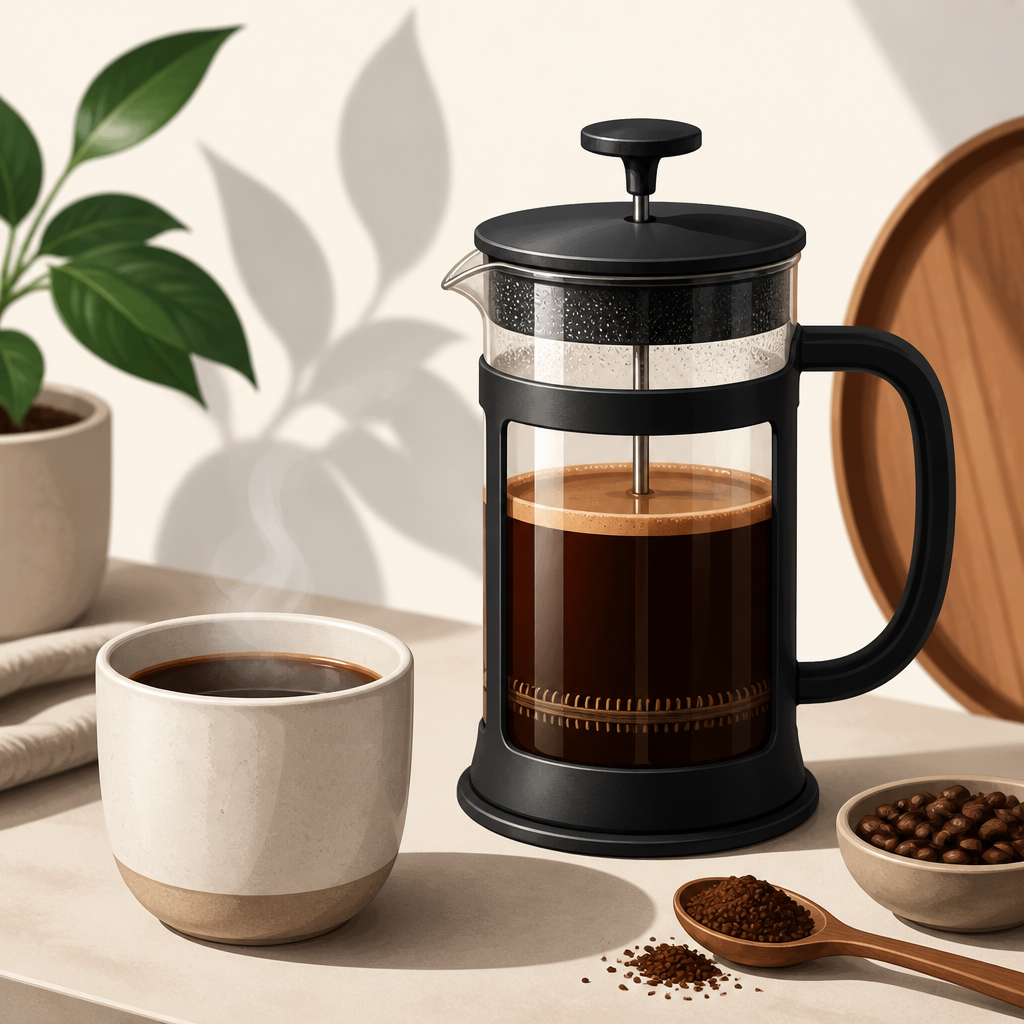
A French press is a simple brewing pot, usually made of glass, stainless steel or plastic, with a lid and a plunger fitted with a fine metal mesh filter. Instead of sending water quickly through a paper filter, it uses immersion brewing. Coffee grounds sit directly in hot water and steep together, allowing the water to draw out their flavor, aroma and natural oils. When the coffee has brewed, you slowly press the plunger down to separate the grounds from the liquid.
That metal filter is part of the appeal. It lets more of the coffee’s flavorful oils reach your mug, creating a rounder texture and deeper flavor than many paper-filtered methods. The result can be bold without being difficult to make.
Learning How to Prepare French Press Coffee is also wonderfully practical. You can adjust the strength, steep time and grind size to suit your taste, but the basic method remains approachable for beginners. In the sections ahead, you will learn about the essential equipment, choosing beans and grind size, using the right water temperature and timing, fixing common problems and serving a better cup every day.
Tools for Preparing French Press Coffee
Tools for Preparing French Press Coffee
One of the pleasures of French press brewing is that it requires only a few straightforward tools. Here is what you will need:
- A French press
- Freshly roasted whole coffee beans
- A burr grinder
- A kettle for heating water
- A timer
- A mug or serving cup
A burr grinder is especially helpful because it produces coffee grounds that are more consistent in size. Evenly sized grounds extract at a similar rate, which helps create a balanced cup. Blade grinders chop beans into a mix of fine powder and larger pieces, so some grounds can over-extract while others remain under-extracted. If a burr grinder is not available, a blade grinder can still work, but grind in short pulses and aim for a coarse texture.
A few optional items can make the process easier and more repeatable. A kitchen scale lets you measure coffee and water accurately, while a thermometer helps confirm that your water is in the ideal brewing range. A wooden spoon or non-metal stirrer is useful for gently mixing the grounds and water without scratching the inside of a glass French press.
French presses come in several sizes, so choose one that fits your usual routine. A small 12-ounce press is convenient for one person and makes roughly one large mug. A 17- to 20-ounce press suits two people or a couple of smaller cups. For family breakfasts, guests or multiple servings, a 34-ounce press is a practical choice.
When gathering your Tools for preparing French Press coffee, prioritize a press that feels sturdy, a reliable grinder and fresh beans. Those simple basics will have the biggest effect on your daily brew.
Choosing the Right Coffee Beans and Grind Size
Choosing the Right Coffee Beans and Grind Size
The best coffee beans for a French press are the ones that match your taste. This brewing method brings out plenty of body and aroma, so it works especially well with coffees you enjoy drinking black or with a little milk.
Medium roasts are a popular starting point. They often offer a balanced cup with notes of chocolate, nuts, caramel or fruit, while still retaining some of the bean’s original character. Dark roasts create a more classic French press profile for many people: bold, deep and rich, with flavors that can lean toward cocoa, toasted nuts and spice. If you prefer a brighter, lighter-tasting cup, a medium-light roast can work nicely too, though it may benefit from careful brewing to avoid sharp acidity.
Whenever possible, buy whole beans rather than pre-ground coffee. Coffee begins to lose aroma and flavor soon after grinding, so grinding only what you need right before brewing makes a noticeable difference. A burr grinder is particularly helpful because it produces more evenly sized particles.
For French press coffee, aim for a coarse grind that looks like coarse sea salt or dry breadcrumbs. The particles should be clearly visible and fairly uniform, not powdery. This size lets water extract flavor steadily during the steep while allowing the metal filter to do its job.
Avoid grinding too fine. Fine grounds extract quickly and can make the coffee taste bitter or harsh. They also slip through the press’s mesh filter, leaving excess sediment in the cup. If the plunger feels difficult to push down, overly fine grounds are often the reason. A slightly coarser grind usually leads to a cleaner, smoother cup with the rich body French press coffee is known for.
How to Prepare French Press Coffee Step by Step
How to Prepare French Press Coffee Step by Step
Learning How to Prepare French Press Coffee is straightforward once you have a reliable starting recipe. Use about 1 gram of coffee for every 15 to 17 grams of water. For a single generous mug, try 20 grams of coarse-ground coffee with 300 to 340 grams of water. A kitchen scale makes this easy, but measuring spoons can work if you do not have one.
-
Preheat the press. Fill the empty French press with hot water, let it sit briefly, then discard the water. This warms the glass or metal and helps keep the brewing temperature more consistent.
-
Add the coffee grounds. Put your freshly ground, coarse coffee into the warmed press.
-
Pour in hot water. Heat water to just below boiling, ideally around 195 to 205°F. Slowly pour it over the grounds, making sure every bit of coffee is saturated. If dry grounds cling to the sides, add a small splash of water to wet them.
-
Stir gently. Use a wooden spoon or other nonmetal stirrer to give the coffee a gentle stir. This helps the grounds extract evenly without damaging a glass press.
-
Steep for four minutes. Place the lid on the press with the plunger pulled all the way up. Do not press it down yet. Let the coffee steep for about four minutes.
-
Press and pour. Push the plunger down slowly and steadily. If it resists strongly, do not force it, as the grind may be too fine. Once pressed, pour the coffee into mugs promptly. Leaving it sitting with the grounds can lead to over-extraction and a bitter finish.
Getting Water Temperature, Timing and Ratios Right
Getting Water Temperature, Timing and Ratios Right
Small adjustments to water, steep time and coffee dose can noticeably change your cup. For reliable French press coffee, use water between 195 and 205 degrees Fahrenheit. If you do not have a thermometer, bring water to a boil, then let it rest for about 30 seconds before pouring. Water that is too cool may leave the coffee tasting sour or thin, while overly hot water can pull out harsh, bitter flavors.
A four-minute steep is a dependable starting point, but it is not a strict rule. A shorter steep, around three minutes, usually produces a lighter-bodied cup with a gentler flavor. Extending the brew to five minutes can create a stronger, fuller cup, although it may also bring more bitterness, especially with darker roasts or a slightly finer grind.
The coffee-to-water ratio matters just as much. A useful everyday recipe is 1 gram of coffee for every 15 to 17 grams of water. For example, use about 30 grams of coffee with 450 to 500 grams, or milliliters, of water.
To make the coffee bolder, increase the dose slightly, such as using a 1:15 ratio. For a milder cup, use less coffee or try a 1:17 ratio. Reducing the coffee dose is often a better first adjustment than steeping for much less time, since very short brews can taste underdeveloped.
When refining your routine, change only one variable at a time. Keep the same beans, grind and steep time while adjusting the ratio, or keep the ratio steady while testing a different steep length. This makes it easier to learn exactly what creates your favorite cup.
Benefits of French Press Coffee
Benefits of French Press Coffee
One of the biggest benefits of French Press coffee is its rich, full-bodied character. Unlike paper filters, the press’s fine metal mesh allows more of the coffee’s natural oils and tiny flavor compounds to reach your cup. These oils add texture, aroma and a satisfying, rounded mouthfeel that many people associate with a café-style brew. A small amount of fine sediment is normal, too, and can contribute to that fuller profile.
A French press also puts you in control. You can choose the grind size, adjust the water temperature, use more or less coffee and change the steep time to suit your taste. Prefer a bold, intense cup? Try a slightly stronger coffee-to-water ratio. Want something softer and lighter? Use a little less coffee or shorten the steep time. This flexibility makes it easy to refine your routine without needing complicated equipment.
It is also an affordable and practical brewing method. A basic French press costs far less than many electric coffee makers, requires no electricity and travels well for camping, holidays or a simple office setup. Since it does not use disposable paper filters or single-use pods, it can reduce both ongoing costs and daily waste.
Depending on the model, a French press can do more than make hot coffee. It works well for cold brew, since the grounds can steep in cool water for several hours before filtering. You can also use it to brew loose-leaf tea, or to froth warm milk by moving the plunger up and down gently. With one compact tool, you have several useful options for everyday drinks.
Common French Press Problems and Easy Fixes
Even with a simple method, a few small details can affect the flavor and texture of your coffee. Fortunately, most French press problems have easy fixes.
If your coffee tastes bitter or harsh, start by checking the grind. Grounds that are too fine extract quickly and can make the cup taste overly bitter. Use a coarser grind, and make sure you are not steeping the coffee for too long. Four minutes is a reliable starting point. Water that is too hot can also pull out unwanted bitter flavors, so let boiling water rest for about 30 seconds before pouring.
Weak coffee usually means the brew needs more coffee, not necessarily more time. Try increasing the dose slightly while keeping the same amount of water. Fresher beans can make a major difference too, especially if your current coffee has been open for several weeks. If the flavor is still light, extend the steep time by 30 seconds at a time.
A muddy or gritty cup is often caused by finely ground coffee slipping through the metal filter. Grind more coarsely, press the plunger slowly and avoid forcing it down. When serving, leave the last small amount of liquid in the press, since it tends to contain the most sediment.
If the plunger feels stuck or unusually difficult to push, do not force it. Fine grounds may be clogging the mesh, the press may be overfilled, or the filter assembly may be bent, loose or damaged. Empty the press, inspect the filter pieces and reassemble them securely. A clean, properly fitted filter and a coarse grind will keep pressing smooth and safe.
Make Every French Press Cup Better
Make Every French Press Cup Better
Great French press coffee comes down to a few dependable habits. Start with fresh, whole beans and grind them just before brewing. Use a coarse grind, similar to coarse sea salt, so the mesh filter can do its job without letting too much sediment into the cup. Add hot water, ideally just below boiling, steep for about four minutes, then press the plunger down slowly and steadily.
That simple method provides a reliable starting point, but your best cup may look slightly different. Try different beans to discover flavors you enjoy, from chocolatey dark roasts to brighter, fruitier medium roasts. Once you have a coffee you like, adjust one brewing detail at a time. Use a little more coffee for a bolder cup, or a little less for a gentler one. Extend the steep time slightly if the coffee tastes thin, or shorten it if the flavor seems too intense or bitter.
Keeping notes can make experimentation easier. Even a quick reminder of the coffee, ratio and steep time can help you recreate a cup that turned out especially well.
Cleaning also matters more than many people realize. After every use, discard the grounds and rinse the carafe, lid and plunger. Take a moment to clean the mesh filter thoroughly, since trapped oils and tiny coffee particles can leave stale flavors in future brews. A periodic deeper wash with warm, soapy water will keep the press working smoothly.
French press coffee rewards simple habits, fresh ingredients and a little practice. Stick to the core method, make small adjustments with confidence and keep your press clean: soon, a rich, full-bodied cup at home will be easy to make every day.