
1. Welcome to the World of Latte Macchiato
Welcome to the World of Latte Macchiato
Few coffee drinks make as much of an entrance as a Latte Macchiato. Served in a tall glass, its distinct bands of warm milk, rich espresso and soft foam turn an everyday coffee break into something that looks café-worthy. The first sip is just as inviting: creamy milk leads the way, while the espresso adds a familiar roasted depth without overwhelming the palate.
Latte Macchiato is a milk-forward drink, making it a popular choice for people who enjoy coffee but find straight espresso a little too strong. It is smooth, comforting and easy to adapt to your preferences. Choose whole milk for a richer texture, use oat or soy milk for a dairy-free option, switch to decaf for an evening treat, or add a little vanilla, caramel or cinnamon for extra flavor. Whether you prefer your coffee lightly sweetened or boldly brewed, this layered drink leaves plenty of room to make it your own.
In this guide, you will discover where Latte Macchiato comes from and what its Italian name tells us about the drink. You will also learn which ingredients create the best flavor and texture, along with the essential Tools for preparing a Latte Macchiato, from an espresso maker to simple frothing alternatives for home use.
Most importantly, we will cover How to prepare a Latte Macchiato with clear, practical steps for creating those signature layers. Along the way, we will look at the Benefits of Latte Macchiato, including its gentler taste, flexible ingredient options and nutritional considerations. With a few basics and a little practice, a beautiful layered coffee can be part of your home routine.
2. What Is a Latte Macchiato?
What Is a Latte Macchiato?
A Latte Macchiato is a milk-forward coffee drink known for its soft flavor and eye-catching layers. Its Italian name means “stained milk”: latte means milk, while macchiato means marked or stained. In this case, the milk is “marked” by a shot of espresso rather than coffee forming the main body of the drink.
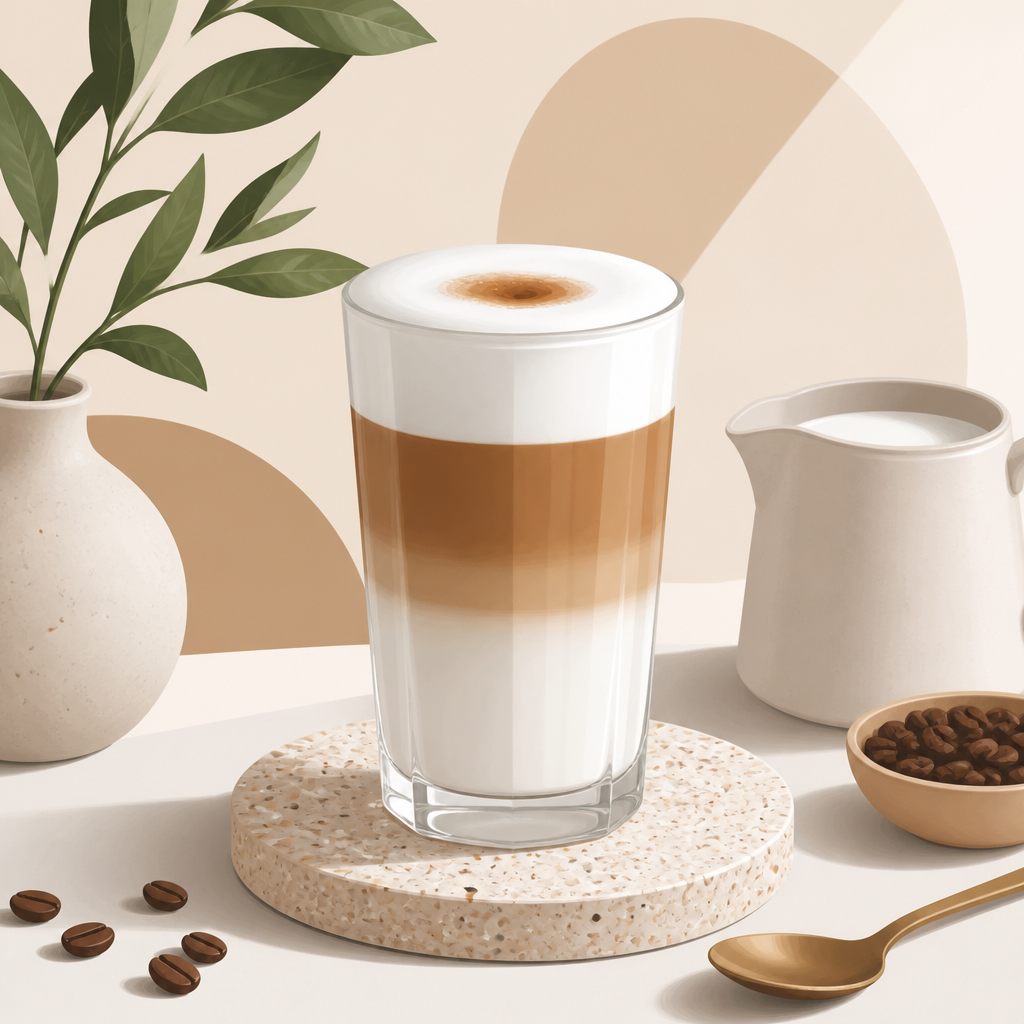
Traditionally, a Latte Macchiato is served in a tall, clear glass so its three distinct layers can be seen. Warm milk forms the base, creating a creamy foundation. Espresso is then poured slowly into the glass, where it settles in a darker band through the middle. A cap of airy milk foam rests on top. The exact definition of the layers can vary slightly with the milk, coffee and pouring technique, but the contrast between pale milk, rich coffee and white foam is part of the drink’s appeal.
Although several Italian coffee drinks contain the same basic ingredients, their proportions and preparation differ:
- Latte Macchiato: Mostly milk, with espresso poured into it. It is typically mild, creamy and layered.
- Caffè latte: Espresso is added first, followed by steamed milk. It is usually mixed more fully and has less dramatic layering.
- Cappuccino: Made with roughly equal parts espresso, steamed milk and milk foam. It has a stronger coffee presence and a thicker foam layer.
- Espresso macchiato: An espresso shot “marked” with just a small spoonful of milk or foam. It is much smaller and bolder than a Latte Macchiato.
In short, a Latte Macchiato suits anyone who enjoys espresso’s aroma but prefers it softened by plenty of warm, velvety milk.
3. A Short History of the Drink
A Short History of the Drink
Latte Macchiato comes from Italy’s long-standing love of combining coffee and milk. Italian coffee culture is often associated with short, intense espresso, but milk-based drinks have also been part of daily café life for generations. The name latte macchiato translates to “stained milk,” which neatly describes the traditional preparation: warm milk is “marked” by a small pour of espresso.
This is different from an espresso macchiato, where espresso is the main ingredient and only lightly marked with milk. In a Latte Macchiato, milk takes center stage, making the drink gentler in flavor and lighter in coffee intensity. It was especially appealing to people who enjoyed the aroma of espresso but found a straight shot too strong.
As Italian-style coffee culture spread around the world, Latte Macchiato became a familiar menu choice in cafés from Europe to North America and beyond. Its distinctive layers also helped it stand out. Served in a tall clear glass, the contrast between pale milk, dark coffee and creamy foam gives the drink an elegant, café-style look that feels special even on an ordinary morning.
Today, the Latte Macchiato has become highly adaptable. Many coffee shops offer versions flavored with vanilla, caramel, hazelnut or chocolate, while iced Latte Macchiatos provide a refreshing option in warmer weather. Plant-based milks such as oat, almond and soy have made it easier for more people to enjoy the drink, too. Although these modern variations may differ from the traditional recipe, they keep the same welcoming idea at the heart of a Latte Macchiato: smooth milk, aromatic coffee and plenty of room to make it your own.
4. Ingredients That Make a Great Latte Macchiato
Ingredients That Make a Great Latte Macchiato
A great Latte Macchiato starts with just a few ingredients, but the quality of each one makes a noticeable difference. Fresh milk provides the drink’s creamy body and signature foam, while a well-made espresso adds the aromatic coffee “stain” that gives the drink its name. Sweeteners, syrups and spices are optional, but they can make the drink feel especially personal.
Milk has a major effect on texture, flavor and layering. Whole milk is a popular choice because its fat content creates a rich, velvety taste and stable, silky foam. Low-fat milk can also foam well, often producing larger, lighter bubbles, though the finished drink may taste less creamy. For a dairy-free Latte Macchiato, oat milk is often a good option because it has a naturally smooth texture and mild sweetness. Soy milk can create substantial foam, while almond milk offers a nuttier flavor but may produce a thinner result. Barista-style plant milks are designed to steam and froth more reliably.
For the coffee, use freshly brewed espresso whenever possible. Choose quality espresso beans with a balanced profile, such as notes of chocolate, caramel, nuts or gentle fruit. Very dark, bitter roasts can become harsh when concentrated, while overly delicate coffee may disappear beneath the milk. A medium or medium-dark roast is often an approachable starting point.
A standard serving usually uses one shot of espresso and a generous amount of milk. If you prefer a stronger coffee flavor, add a double shot rather than reducing the milk too much, since the milk is central to the drink’s character.
Vanilla, caramel, hazelnut or cinnamon syrup can add sweetness, while a dusting of cocoa or cinnamon gives a simple finishing touch. Start lightly, taste, and adjust. The best Latte Macchiato balances creamy milk with coffee that remains present, smooth and inviting.
5. Tools for Preparing a Latte Macchiato
Tools for Preparing a Latte Macchiato
You do not need a professional café setup to make a satisfying layered drink, but a few helpful tools make the process easier and more consistent. The essential Tools for preparing a Latte Macchiato include:
- An espresso machine, ideally with a steam wand, for brewing espresso and texturing milk
- A moka pot as a simple alternative for making strong, espresso-style coffee
- A milk frother, steam wand or small whisk for creating warm milk with a cap of foam
- A tall, heatproof glass, which shows off the drink’s signature layers
- A small measuring cup or espresso shot glass to control the coffee and milk amounts
- A long spoon, useful for guiding the espresso gently onto the milk and foam
For beginners, a kitchen thermometer can be especially useful. Milk is usually at its most pleasant when warmed to around 140 to 150°F, or 60 to 65°C. Heating it beyond this point can dull its natural sweetness and give it a slightly scorched flavor. The milk should feel hot but not bubbling aggressively.
If you do not own a steam wand or electric frother, there are several practical home-kitchen options. A handheld battery-powered frother can produce foam in seconds. You can also warm milk, pour it into a clean French press, and pump the plunger up and down until the milk becomes airy. Another low-cost method is to shake warm milk in a tightly sealed jar, then spoon the foam onto the drink. Take care when handling hot liquids, and never fill a sealed container too full.
The equipment matters less than the technique. With strong coffee, well-warmed milk and enough foam to support a slow pour, you can create an attractive Latte Macchiato with tools you already have.
6. How to Prepare a Latte Macchiato
How to Prepare a Latte Macchiato
Learning How to prepare a Latte Macchiato is mostly about timing and a gentle hand. The drink starts with milk, then gets its signature “stain” of espresso, creating the distinct layers that look so appealing in a clear glass.
-
Prepare the espresso. Brew one shot of fresh espresso, about 30 ml. Choose a coffee with a balanced flavor, since it needs enough character to come through the milk. If you do not have an espresso machine, use strong moka pot coffee instead.
-
Heat and froth the milk. Pour about 200 to 250 ml of milk into a jug or heatproof container. Steam or warm it until it is hot but not boiling, ideally around 60 to 65°C. Create a layer of soft, airy foam rather than very stiff bubbles. Whole milk usually gives the creamiest result, although many barista-style plant milks also foam well.
-
Pour the milk into a tall glass. Start with the warm liquid milk, then spoon or pour the foam on top. Leave a little room near the rim for the espresso. A clear, heatproof glass makes it easier to enjoy the finished layers.
-
Add the espresso slowly. Pour the espresso in a thin, steady stream through the foam. For cleaner layers, pour it over the back of a spoon held just above the foam. This slows the coffee down, helping it settle between the milk and foam instead of mixing straight through.
Serve immediately while the milk is warm and the layers are visible. Add vanilla or caramel syrup to the glass before the milk for a sweeter version, or finish with a pinch of cinnamon or cocoa over the foam. Taste before adding extra sugar, since a good Latte Macchiato is naturally smooth and creamy.
7. Benefits of Latte Macchiato
Benefits of Latte Macchiato
One of the main Benefits of Latte Macchiato is its gentle, creamy character. The generous amount of warm milk softens the bold edge of espresso, making the drink especially appealing for anyone who finds straight espresso too strong, bitter or intense. It still has a distinct coffee flavor, but the experience is smoother and more relaxed than a small, concentrated shot.
It is also an easy drink to adapt to personal preferences. Choose decaffeinated espresso for an evening treat or for a lower-caffeine routine. Dairy-free milks, such as oat, soy, almond or coconut, can make it suitable for people avoiding dairy, although each option changes the flavor and foam slightly. If you prefer less sweetness, skip flavored syrups and let the natural sweetness of steamed milk take the lead. A little cinnamon, unsweetened cocoa or vanilla extract can add flavor without turning the drink into a sugary dessert.
Nutritionally, the details depend on the milk, serving size and extras you choose. Dairy milk can contribute protein and calcium, while many fortified plant-based milks offer similar nutrients. The espresso provides caffeine, which may support alertness and concentration for some people. However, caffeine affects everyone differently, so decaf can be a sensible choice for those who are sensitive to it or drinking coffee later in the day.
Keep an eye on portions and add-ins. Large drinks made with full-fat milk, whipped cream or several pumps of syrup can add considerable calories and sugar. There is nothing wrong with enjoying an indulgent version occasionally, but a balanced Latte Macchiato can be as simple as espresso, milk and foam. Choose the ingredients that fit your tastes and dietary needs, then enjoy it as part of a varied, balanced routine.
8. Make Your Perfect Layered Coffee at Home
8. Make Your Perfect Layered Coffee at Home
A satisfying Latte Macchiato comes down to three simple elements: a good espresso, smoothly textured milk and a patient pour. Choose coffee with enough body to remain noticeable through the milk, but avoid an overly bitter brew. Freshly made espresso is ideal, whether it comes from an espresso machine, moka pot or another strong coffee method.
Milk matters just as much. Heat it gently until warm rather than boiling, then create a light, velvety foam. Whole milk often produces the richest texture, while low-fat and plant-based milks can make excellent alternatives when frothed carefully. Oat milk, in particular, can offer a naturally creamy result, especially barista-style varieties designed for steaming.
For the signature layered look, pour the warm milk into a tall glass first. Add the espresso slowly afterward, aiming for the center of the foam. Pouring over the back of a spoon can slow the stream and help the coffee settle between the milk and foam instead of mixing immediately. The layers may not look perfect on the first attempt, and that is part of the fun. Taste matters more than a picture-perfect finish.
You do not need a fully equipped café counter to make this drink at home. A handheld frother, French press or even a tightly sealed jar for shaking warm milk can help create foam, while a moka pot can make a concentrated coffee base. With a little practice, basic tools can produce a comforting, café-style drink.
Try different milks, coffee strengths and flavors, from cinnamon and vanilla to a touch of caramel or cocoa. The clear takeaway is simple: start with quality coffee, well-frothed milk and a gentle pour, then make the Latte Macchiato your own.