
Welcome to the World of Drip Coffee
Welcome to the World of Drip Coffee
Few things make a home feel more welcoming than the smell of coffee brewing. Drip coffee is one of the easiest ways to enjoy that everyday comfort, whether you are rushing out the door on a weekday or lingering over breakfast on a quiet weekend morning.
At its heart, drip coffee is familiar, practical and wonderfully flexible. An automatic coffee maker can prepare several cups while you pack a lunch or answer a few emails. A simple manual dripper can turn a slower morning into a small, satisfying ritual. Either way, you do not need barista-level skills or a kitchen full of gadgets to make a good cup.
That accessibility is part of what makes drip coffee so popular. You can brew a mild mug to sip with toast, make a stronger pot for guests or try different beans until you find flavors you love. Add milk, cream or sweetener, or drink it black and let the coffee stand on its own. There is plenty of room to personalize each brew without making the process complicated.
This guide will walk through How to prepare drip coffee with confidence, starting with the beans, water and filters that shape every cup. You will also learn about useful Drip Coffee Preparation Tools, from basic brewers and filters to optional items that help improve consistency. Finally, a few straightforward brewing habits can make a noticeable difference in flavor.
Great coffee does not have to be fussy. With fresh ingredients, a reliable method and a little curiosity, your everyday drip coffee can become a part of the day you genuinely look forward to.
What Is Drip Coffee?
What Is Drip Coffee?
Drip coffee is made by letting hot water pass gradually through ground coffee and a filter. As the water moves through the grounds, it extracts flavor, aroma and color, then drips into a carafe, pot or mug below. It is a simple brewing method, but it gives you plenty of room to shape the final cup.
The version many people know best comes from an automatic drip coffee maker. You add a filter, measure in the grounds, fill the water reservoir and press a button. The machine heats the water and sends it over the coffee for you, making it especially convenient for busy mornings or brewing several cups at once.
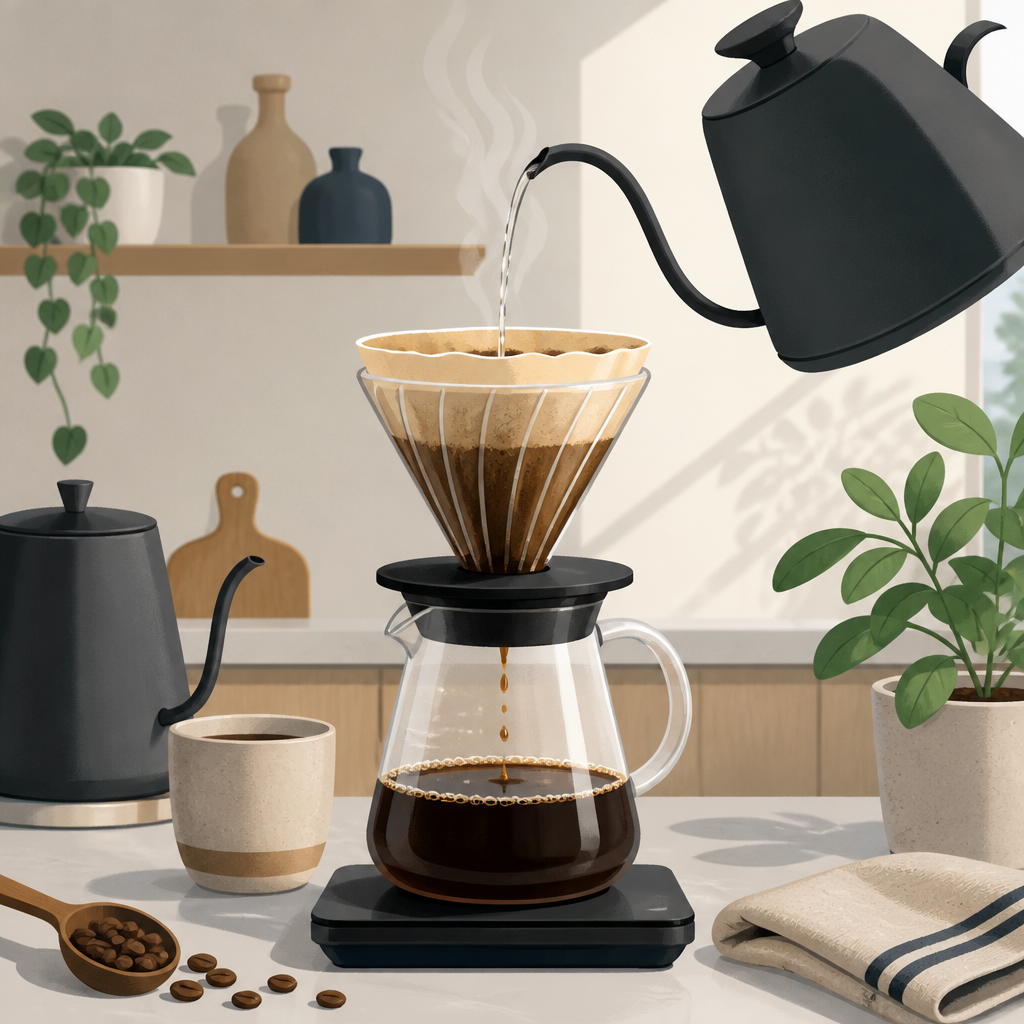
Manual pour-over coffee follows the same basic principle, although you control the process yourself. Using a dripper placed over a mug or carafe, you pour hot water slowly over the grounds in stages. This takes a little more attention, but it can be a relaxing routine and gives you more direct control over the flow of water and brewing time.
Whether it comes from a machine or a pour-over dripper, drip coffee is usually known for a clean, balanced and approachable flavor. Filters hold back most of the coffee grounds, and paper filters also capture many of the natural oils, creating a lighter-bodied cup with clear flavors.
One of the nicest things about drip coffee is how easy it is to customize. Try different beans for brighter, fruitier or deeper, chocolate-like notes. Change the coffee-to-water ratio for a stronger or milder brew, or make small adjustments to the grind and brew settings. With a few simple choices, drip coffee can suit almost any taste.
Drip Coffee Preparation Tools You Need
Drip Coffee Preparation Tools You Need
You do not need a complicated setup to make enjoyable drip coffee. Start with a brewer that fits your routine. An automatic drip coffee maker is ideal for busy mornings and for brewing several cups at once. A manual pour-over dripper is a simple, hands-on option that gives you more control over the speed and direction of the pour.
You will also need filters that match your brewer. Paper filters are convenient and help create a clean, crisp cup. Reusable metal or cloth filters can reduce waste and allow more of the coffee’s natural oils into the finished drink. Keep a carafe or a favorite mug nearby, depending on whether you are making a full pot or a single serving.
Fresh coffee beans are another important part of your Drip Coffee Preparation Tools. For the best flavor, use a burr grinder to grind beans shortly before brewing. Unlike blade grinders, burr grinders produce more evenly sized grounds, which helps water extract flavor more consistently. That said, pre-ground coffee can still make a satisfying everyday cup, especially when stored in an airtight container and used reasonably soon after opening.
A few optional tools can make your routine more precise. A kitchen scale helps you measure coffee and water accurately, so a great brew is easier to repeat. A gooseneck kettle gives manual pour-over brewers a slow, steady stream of water. A timer helps you track blooming and total brew time, while an insulated carafe keeps a larger batch warm without relying on a hot plate.
Choose the basics first, then add extras only if you enjoy the process. Good coffee, clean equipment and a reliable brewer will take you a long way.
Choosing Coffee Beans, Water and Filters
Choosing Coffee Beans, Water and Filters
Great drip coffee starts with ingredients that taste good before brewing even begins. Whenever possible, buy freshly roasted whole beans and use them within a few weeks of opening the bag. Look for a roast date rather than relying only on a best-by date, since fresher beans usually offer more aroma and flavor.
Choose the roast level that suits your taste. Light roasts often bring brighter, fruitier or more floral notes. Medium roasts tend to be balanced and familiar, with sweetness, gentle acidity and a rounded body. Dark roasts offer fuller, richer flavors, often with deeper toasted, chocolatey or smoky notes. There is no single best choice, so trying a few roast styles is a simple way to find your everyday favorite.
For most automatic drip machines, a medium grind is a dependable starting point. It should resemble regular sand, not fine powder or large chunks. If the coffee tastes weak or sour, try a slightly finer grind. If it tastes bitter or seems to brew too slowly, go a little coarser. Manual brewers may need small grind adjustments depending on the dripper, filter and pouring speed.
Do not overlook the water. Since it makes up most of every cup, clean, good-tasting water matters. Use cold, fresh water from the tap if you enjoy its flavor, or filtered water if your tap water has a strong mineral, chlorine or metallic taste.
Your filter choice also shapes the cup. Paper filters catch more fine particles and oils, producing a cleaner, brighter brew with a lighter body. Metal filters are reusable and let more natural coffee oils pass through, creating a fuller, richer cup with more texture. Both can make excellent coffee, so choose paper for clarity or metal for body.
How to Prepare Drip Coffee Step by Step
How to Prepare Drip Coffee Step by Step
Learning How to prepare drip coffee does not require complicated measurements or professional skills. Start with a dependable baseline: use 1 to 2 tablespoons of ground coffee for every 6 ounces of water. Choose the lower end for a lighter cup and the higher end for a stronger brew. After a few batches, adjust the amount to match your taste.
For an automatic drip coffee maker, place a clean paper or reusable filter in the brew basket, then add your measured grounds. Fill the machine’s water reservoir with fresh, cool water, using the markings on the carafe or reservoir as a guide. Start the brewing cycle and let the machine do the work. Once it finishes, pour and serve fairly soon. Coffee left on a warming plate too long can develop a bitter, cooked flavor.
Manual drip brewing, often called pour-over, takes a little more attention but gives you more control. Add the grounds to your filter, then pour in just enough hot water to wet them evenly. Let the coffee sit for about 30 seconds. This brief step, called blooming, helps trapped gases escape and allows water to extract flavor more evenly.
Next, slowly pour water over the grounds in small, steady circles. Pause between pours so the water can drip through, then continue until you have reached your desired amount.
In either method, avoid pouring fully boiling water directly onto the coffee. Let boiling water rest for roughly 30 seconds first. Water that is hot but just off the boil helps bring out sweetness and aroma without pulling too much bitterness from the grounds.
Simple Ways to Make Your Drip Coffee Taste Better
Simple Ways to Make Your Drip Coffee Taste Better
A few small habits can make a noticeable difference to your daily cup. One of the easiest improvements is to grind whole beans just before brewing. Coffee begins to lose aromatic compounds soon after it is ground, so a fresh grind usually delivers a fuller aroma and brighter, more lively flavor. A burr grinder is especially useful because it creates evenly sized grounds, helping the water extract coffee more consistently.
Clean equipment matters just as much as fresh coffee. Rinse the filter basket and carafe after every use, and wash them regularly with warm, soapy water. Coffee oils can cling to surfaces and turn stale over time, giving fresh brews an unpleasant bitter or sour edge. Do not forget the water reservoir and any removable parts. Following your machine’s cleaning instructions, including occasional descaling, helps prevent mineral buildup and keeps water flowing properly.
Try not to leave finished coffee sitting on a hot plate for too long. Even good coffee can become harsh, burnt tasting, or overly bitter when it stays heated. If you make more than one cup at a time, transfer the brewed coffee to an insulated carafe, or serve it soon after the brewing cycle ends.
Finally, make changes gradually. If your coffee tastes weak, try adding a little more coffee before changing anything else. If it tastes bitter, use a slightly coarser grind or slightly cooler water. Adjusting one detail at a time, whether it is grind size, coffee amount, or water temperature, makes it much easier to learn what suits your taste.
Benefits of Drip Coffee for Everyday Drinkers
Benefits of Drip Coffee for Everyday Drinkers
One of the biggest Benefits of Drip Coffee is its everyday convenience. An automatic coffee maker can brew several cups at once with very little effort: add water, place the filter and grounds in the basket, then press a button. While the machine works, you can get breakfast ready, pack a bag, or simply ease into the morning. This makes drip coffee especially useful for households where more than one person wants a cup.
It is also an affordable way to enjoy good coffee regularly. Buying beans or ground coffee for home brewing usually costs far less per serving than picking up a café drink each day. Even choosing better-quality, freshly roasted beans can be economical when compared with the price of frequent coffee shop visits. A simple brewer, filters, and coffee are all most people need to get started.
Drip coffee is flexible, too. You can choose light, medium, or dark roasts, brew a mild cup or a stronger one, and make only enough for yourself or a full pot to share. Drink it black to notice the character of the beans, or tailor it with milk, cream, sugar, syrups, or plant-based alternatives. Small changes in the coffee amount or water volume can help you create a cup that feels just right.
Finally, drip brewing often produces a balanced, approachable cup. Paper filters catch much of the coffee’s natural oil and fine sediment, resulting in a cleaner texture and a less oily finish. For many everyday drinkers, that smooth, familiar style is exactly what makes drip coffee so easy to enjoy day after day.
Make Drip Coffee Part of Your Daily Ritual
Make Drip Coffee Part of Your Daily Ritual
Great drip coffee does not require complicated techniques or expensive equipment. More often, it comes down to a few dependable habits: using fresh coffee, starting with clean water, choosing a suitable filter and keeping your brewer clean. Whether you use an automatic machine before work or a manual dripper on a quiet morning, those small details can make each cup taste noticeably better.
Start with a simple routine that fits your schedule. Measure your coffee and water, use a medium grind for a standard coffee maker and brew the coffee soon after grinding when possible. If mornings are busy, prepare what you can the night before by setting out the filter, beans, mug and carafe. This keeps the process easy without sacrificing the quality of your daily brew.
As you become more familiar with How to prepare drip coffee, make small changes based on what you taste. If your coffee seems weak, try a little more ground coffee. If it tastes bitter or harsh, use a slightly coarser grind or reduce the brew strength. Prefer brighter, fruitier flavors? Explore lighter roasts. Want something deeper and richer? A medium-dark or dark roast may suit you better. Adjust one thing at a time, then give yourself a few brews to notice the difference.
The best routine is the one you will enjoy repeating. With fresh ingredients, basic Drip Coffee Preparation Tools and a little attention to your preferences, a reliable cup can become a welcome part of the day. The clear takeaway: good drip coffee is simple, personal and easy to make enjoyable every morning.